
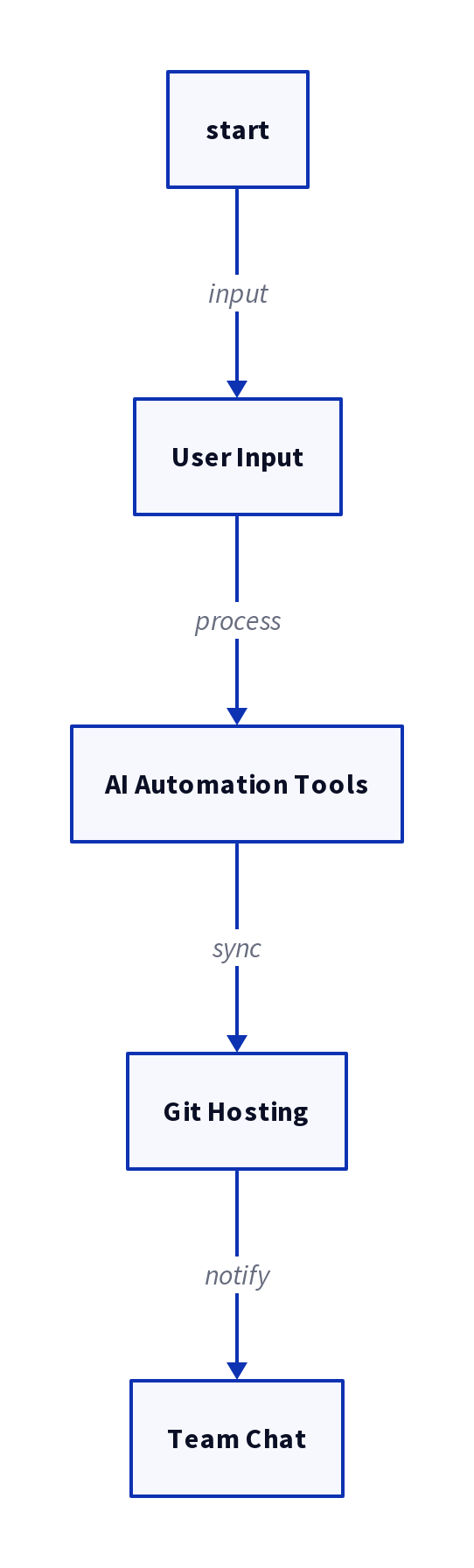
Jack Dorsey’s new platform Buzz merges AI automation tools with team chat and Git hosting, a move that could shift how teams manage code and collaboration. You’re likely spending hours each week on repetitive tasks that could be automated, yet your current tools leave you stuck between fragmented systems and incomplete data. Buzz aims to close that gap by integrating AI agents directly into workflows, potentially cutting down manual effort and reducing errors in real time.
This article breaks down how Buzz’s approach to AI automation tools might reshape your team’s efficiency. It looks at what this means for developers, managers, and anyone relying on consistent, error-free code delivery, without overselling the potential or ignoring the practical challenges ahead.
The Gap Between Collaboration and Automation in Modern Teams
Teams are spending too much time switching between tools to get work done. Chat platforms, version control systems, and automation tools operate in silos, forcing workers to repeat tasks across interfaces. This fragmentation doesn’t just slow progress, it creates opportunities for error and delays critical feedback loops.
The result is a workflow that’s reactive, not proactive. Manual checks and updates take hours, and by the time issues surface, they’ve already impacted downstream processes. Even with current AI automation tools, most teams lack the integration needed to make real-time decisions based on code changes or collaboration inputs.
Buzz’s approach addresses this by bringing these functions together, but only if teams are ready to move beyond the status quo.

What Buzz Actually Is and How It Works
Buzz’s AI agent integration
Buzz embeds AI agents directly into workflows, allowing them to perform repetitive tasks without requiring constant human input. These agents can monitor code changes, flag potential issues, and even suggest fixes based on historical data. Unlike traditional AI automation tools, Buzz’s agents are designed to interact with team chat, ensuring real-time updates and reducing the need for manual follow-ups.
The AI agents operate within the platform’s interface, eliminating the need to switch between tools. This integration means that developers and quality managers can receive immediate alerts and recommendations without leaving their current task. The result is fewer errors and faster resolution times, which is critical for teams managing complex codebases.
Team chat functionality in Buzz
Buzz’s team chat feature is built to be a central hub for communication, replacing the need for multiple chat platforms. It allows team members to discuss code changes, share updates, and collaborate in real time, all within the same environment where work is being done. This reduces context-switching and keeps conversations tied directly to the work being performed.
Unlike fragmented team collaboration software, Buzz ensures that chat logs are linked to specific code commits and project milestones. This creates a traceable record of decisions and actions, making it easier to review past work and identify bottlenecks. It also supports integration with existing chat tools, allowing teams to adopt Buzz without disrupting current workflows.
Git hosting capabilities of Buzz
Buzz includes native Git hosting, which means teams can manage repositories, track changes, and manage access rights without relying on external platforms. This eliminates the need to juggle between a Git hosting platform and a project management or chat tool, streamlining the development lifecycle.
The platform supports standard Git operations and integrates with CI/CD pipelines, ensuring that code is tested and deployed efficiently. This built-in Git hosting capability reduces latency and keeps all development activity within a single, unified interface, a key advantage over current tools that require switching between multiple platforms.
How Buzz Stands Out in the AI Automation Space
Buzz vs. traditional team chat tools
Traditional team chat tools like Slack or Microsoft Teams are great for communication, but they lack the ability to act on the information shared. Buzz embeds AI agents that don’t just relay messages but execute actions based on context. This means issues are resolved before they escalate, and teams stay focused on high-value work rather than chasing down updates in multiple channels.
Buzz vs. standalone AI agent platforms
Standalone AI agent platforms often operate in isolation, disconnected from the tools teams use daily. Buzz integrates AI agents directly into workflows, ensuring they interact with chat and code repositories in real time. This eliminates the need to toggle between systems, reducing context switching and keeping teams aligned on priorities and progress.
Buzz vs. conventional Git hosting services
Conventional Git hosting services like GitHub or GitLab are powerful for version control but don’t natively support automation or collaboration in the same interface. Buzz brings AI agents and team chat into the Git hosting environment, allowing developers to get instant feedback, automate checks, and resolve issues without leaving the platform. This creates a unified workflow that conventional tools struggle to replicate.

Practical Applications of Buzz in Real-World Workflows
Accelerating software development with Buzz
Buzz allows developers to automate repetitive tasks like code reviews and deployment checks, reducing the time spent on manual processes. By embedding AI agents into the development lifecycle, teams can move faster without sacrificing quality. This is especially valuable in environments where speed and accuracy are both critical.
Improving team communication in cross-functional projects
Cross-functional teams often struggle with misaligned priorities and delayed feedback. Buzz’s integration of team chat with AI automation ensures that updates and alerts are shared in real time, keeping everyone on the same page. This reduces the need for status meetings and keeps focus on execution.
Enhancing code quality through AI integration
Buzz’s AI agents can analyze code changes and flag potential issues before they reach production. This proactive approach minimizes the risk of errors and ensures that quality remains consistent throughout the development cycle. Unlike traditional AI automation tools, Buzz ensures these checks happen within the same interface used for collaboration and version control.
Ready to find AI opportunities in your business?
Book a Free AI Opportunity Audit. It is a 30-minute call where we map the highest-value automations in your operation.
The Future of AI Automation in Team Collaboration Tools
Trends shaping the next generation of AI automation
AI automation tools are evolving from task-specific helpers to proactive workflow participants. The next phase will see agents not just reacting to inputs but anticipating needs based on historical patterns and real-time data. This shift will reduce the burden on teams and allow them to focus on innovation rather than maintenance.
Integration with tools like Git hosting platforms will become more seamless, enabling continuous monitoring and improvement. Teams will expect AI to understand context across systems, not just within one tool or interface. This will demand more sophisticated machine learning models and better data interoperability.
The role of AI in unifying development and operations
AI will act as a bridge between traditionally siloed functions, making it easier for development and operations teams to work in sync. By embedding AI agents into team chat and Git hosting, platforms like Buzz can provide real-time insights and automate cross-functional tasks without requiring human intervention.
This unification will reduce the friction that comes from manual handoffs and fragmented communication. Operations leaders will benefit from faster feedback loops and more accurate data, enabling them to make decisions based on current conditions rather than outdated reports.
Potential challenges and opportunities ahead
Adopting these tools will require cultural shifts and investment in training. Teams used to working in silos may resist changes that challenge existing workflows. However, the opportunity to streamline operations and reduce errors is significant enough to justify the effort.
As AI automation tools become more integrated, security and data privacy will become critical concerns. Companies will need to ensure that AI agents have proper access controls and that sensitive information is protected. The upside is a more efficient, responsive, and collaborative work environment that adapts to real-time needs.
Source: runtimewire.com