What Just Happened: Firmus, Nvidia, and a $5.5B Bet on AI Infrastructure
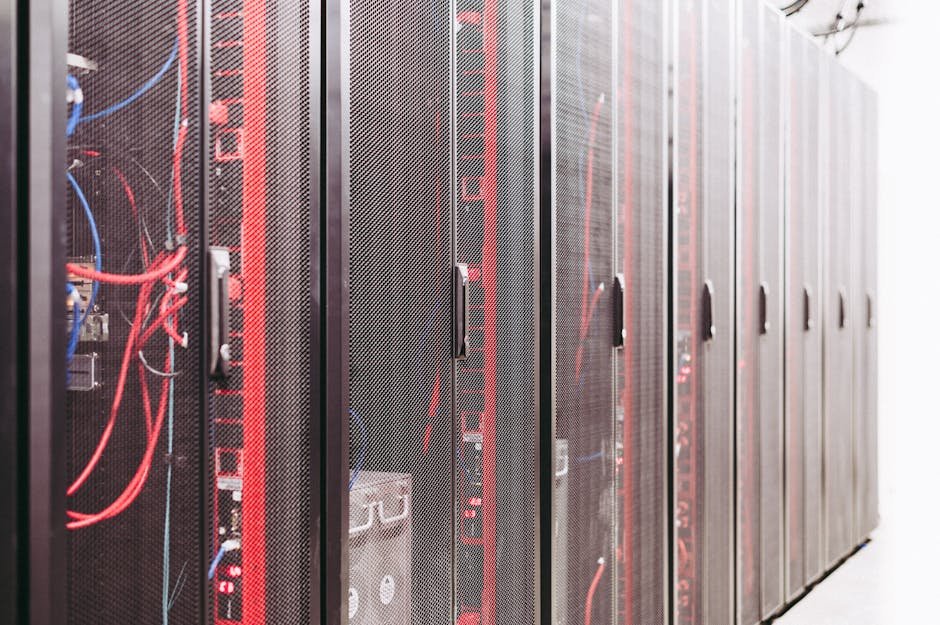
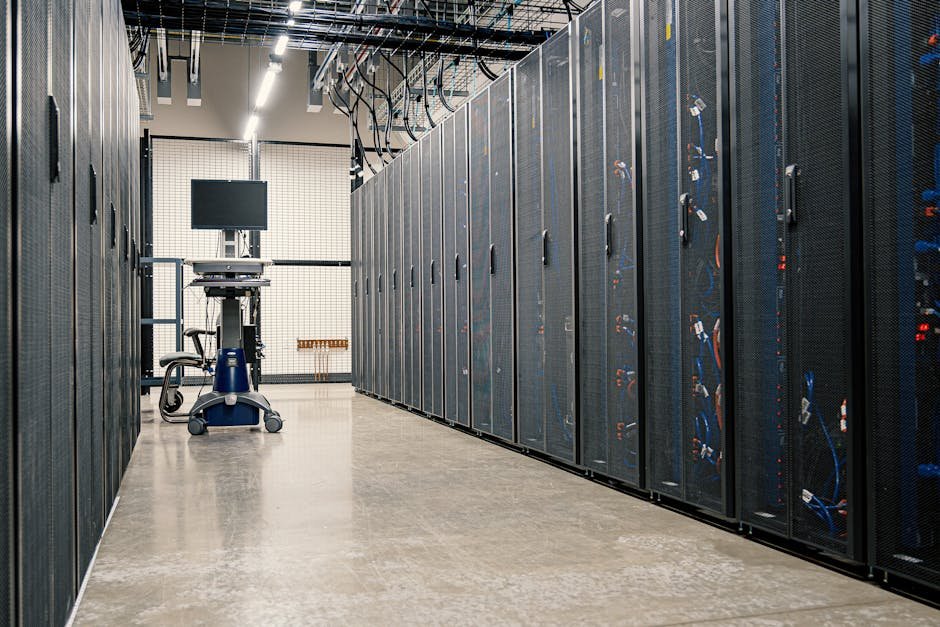
Firmus, the Belfast-based data center company behind what is now widely referred to as the Firmus Southgate data center project, recently reached a staggering $5.5 billion valuation — a number that would have seemed impossible for a European data center operator just five years ago. Firmus has built its reputation on energy-efficient, high-density compute infrastructure, and the Southgate model represents a deliberate architectural approach: facilities designed from the ground up to handle the thermal and power demands of modern AI workloads. This is not a legacy data center retrofitted for AI. It is purpose-built for it.
Nvidia’s involvement is what transforms this from a regional infrastructure story into a global signal. When the world’s leading AI chip manufacturer backs a facility architecture, it confirms that the hardware and the physical infrastructure are finally converging at the pace AI adoption demands. Nvidia’s backing effectively certifies the Firmus Southgate data center model as production-ready for enterprise AI at scale — meaning the bottleneck between AI capability and real-world deployment is shrinking faster than most operations leaders realize.
A $5.5 billion valuation does not happen in a vacuum. It reflects institutional confidence that AI compute demand will continue to accelerate, that enterprises across every sector will require more of it, and that the infrastructure to deliver it is now a genuinely scarce and strategically valuable asset. For manufacturing leaders watching from the sidelines, this number is not just a financial headline — it is a countdown clock.
Why This Valuation Is a Wake-Up Call for Operations Leaders
Hyperscale AI infrastructure investment has a direct downstream effect on cost and accessibility. When facilities like the Firmus Southgate data center come online at scale, they increase available compute capacity across the market, which drives down the per-unit cost of running AI models. Cloud providers, AI platform vendors, and enterprise software companies all benefit from cheaper infrastructure — and they pass a portion of those savings on to their customers. The result is that AI tools which required significant capital investment two years ago are now available as affordable SaaS products or API-based services.
This accessibility shift is compressing the window for first-mover advantage in manufacturing. Right now, forward-thinking operations leaders can implement AI-driven quality control, automated defect detection, and intelligent demand forecasting ahead of their competitors. They can build internal expertise, clean their data pipelines, and embed AI into their workflows before it becomes an industry baseline. That window is not permanent. As infrastructure matures and costs fall further, adoption will accelerate across the board — and the gap between early movers and late adopters will become structural, not just tactical.
The Firmus Southgate data center valuation is a proxy for how fast the entire AI ecosystem is moving. Investors do not commit $5.5 billion to infrastructure they expect to sit idle. They commit it because they see inevitable, large-scale enterprise demand on the horizon. Operations leaders who read that signal correctly — and act on it now — are the ones who will build durable competitive advantages over the next three to five years.
The Manufacturing AI Opportunity This Infrastructure Unlocks
Scalable, affordable AI compute changes what is economically viable on the plant floor. Predictive quality control is one of the most immediate beneficiaries. By running machine learning models on sensor data from production equipment, manufacturers can identify deviation patterns before they result in defective output — reducing scrap rates, rework costs, and the labor burden on quality inspection teams. These models require continuous data processing and inference at speed, which is exactly what modern AI infrastructure like the Firmus Southgate data center architecture is designed to support.
Automated visual inspection is another high-impact use case that becomes increasingly accessible as compute costs fall. Computer vision models trained on defect imagery can inspect components faster and more consistently than human operators, catching subtle surface defects, dimensional errors, and assembly faults that manual inspection misses. What once required expensive on-premise GPU clusters can now be deployed via cloud inference APIs — making it viable for mid-size manufacturers, not just tier-one automotive or aerospace suppliers.
Demand forecasting and production scheduling are also being transformed. AI models that ingest historical order data, supply chain signals, and market indicators can generate significantly more accurate short-term forecasts than spreadsheet-based methods. This directly reduces both overproduction waste and stock-out risk. The infrastructure buildout happening globally — represented by investments like the Firmus Southgate data center — is what makes these capabilities available to operations teams without requiring a dedicated data science department to maintain them.
How to Position Your Operation Before the Window Closes
The first concrete step is to audit your highest-friction manual workflows. Quality managers and operations leaders carry significant cognitive load managing processes that are still driven by spreadsheets, paper-based checklists, and reactive inspection routines. These are not just inefficiencies — they are AI entry points waiting to be activated. Document where your team spends the most time on repetitive data collection, manual review, or exception handling. That is your AI opportunity map.
The second step is to identify your highest-ROI AI entry point and focus there first. Manufacturers who try to transform everything simultaneously almost always stall. A single well-scoped AI pilot — a predictive maintenance model on your most failure-prone asset, or an automated inspection system on your highest-defect product line — delivers proof of value, builds internal confidence, and generates the data and learnings needed to scale. Start narrow, succeed visibly, then expand.
The third step is to build internal readiness in parallel. This means cleaning and centralizing your production data, identifying internal champions who will own AI tools after deployment, and establishing basic AI literacy across your quality and operations teams. The organizations that struggle with AI adoption are rarely blocked by technology — they are blocked by data fragmentation and change resistance. Infrastructure investments like the Firmus Southgate data center are making the technology side easier every month. The human and data readiness side is where you should be investing attention right now.
Ready to find AI opportunities in your business?
Book a Free AI Opportunity Audit — a 30-minute call where we map the highest-value automations in your operation.
Conclusion
The Firmus Southgate data center reaching a $5.5 billion valuation is not just a business story — it is a structural signal that AI infrastructure is scaling at a pace the market did not anticipate even two years ago. More compute capacity, lower deployment costs, and broader platform accessibility are coming. The question is not whether AI will become standard in manufacturing operations. It will. The question is whether your business is positioned to lead that transition or scramble to catch up with competitors who moved earlier.
For quality managers and operations leaders, the cost of waiting is rising with every infrastructure milestone like this one. The tools exist. The economics are increasingly favorable. The workflows that drain your team’s time and limit your quality outcomes are addressable today — not in some future state when AI is more mature. It is already mature enough. What remains is the decision to act.
At FalcoX AI, we help manufacturing and operations teams identify exactly where AI delivers the fastest, most measurable return — without the noise, the vendor hype, or the six-month consulting engagements. If you want to know where the real opportunities are in your specific operation, the Free AI Opportunity Audit is the right starting point. Thirty minutes. No obligation. A clear picture of where AI can eliminate manual work and move the needle on quality and throughput.