
Following Anthropic’s record-breaking IPO, a Wall Street Journal profile revealed that CEO Dario Amodei once floated a dystopian solution for AI-induced joblessness: keeping the masses pacified with immersive video games. If you are managing operations or quality control on a manufacturing floor, you probably do not have time for sci-fi panic or speculative labor displacement theories. Your teams are facing real bottlenecks right now, and you need practical ways to handle them without breaking your processes.
Instead of worrying about far-future scenarios, we need to look at what practical automation actually achieves for your business today. By focusing on targeted workflows rather than sweeping workforce replacement, you can eliminate manual burdens, improve quality outcomes, and redirect your best people toward high-value work.
Beyond Dystopian Slack Messages: What the Anthropic IPO Reveal Means for Operations
Silicon Valley headlines tend to swing between two extremes. On one side, executives debate whether immersive digital worlds are the answer to mass unemployment. A Wall Street Journal profile published after the Anthropic IPO noted that CEO Dario Amodei discussed how
immersive video games might be a solution for the political strife caused by AI-induced joblessness
among employees in leaked Slack messages. That level of speculative anxiety makes for great media coverage, but it has zero relevance to your daily production schedule.
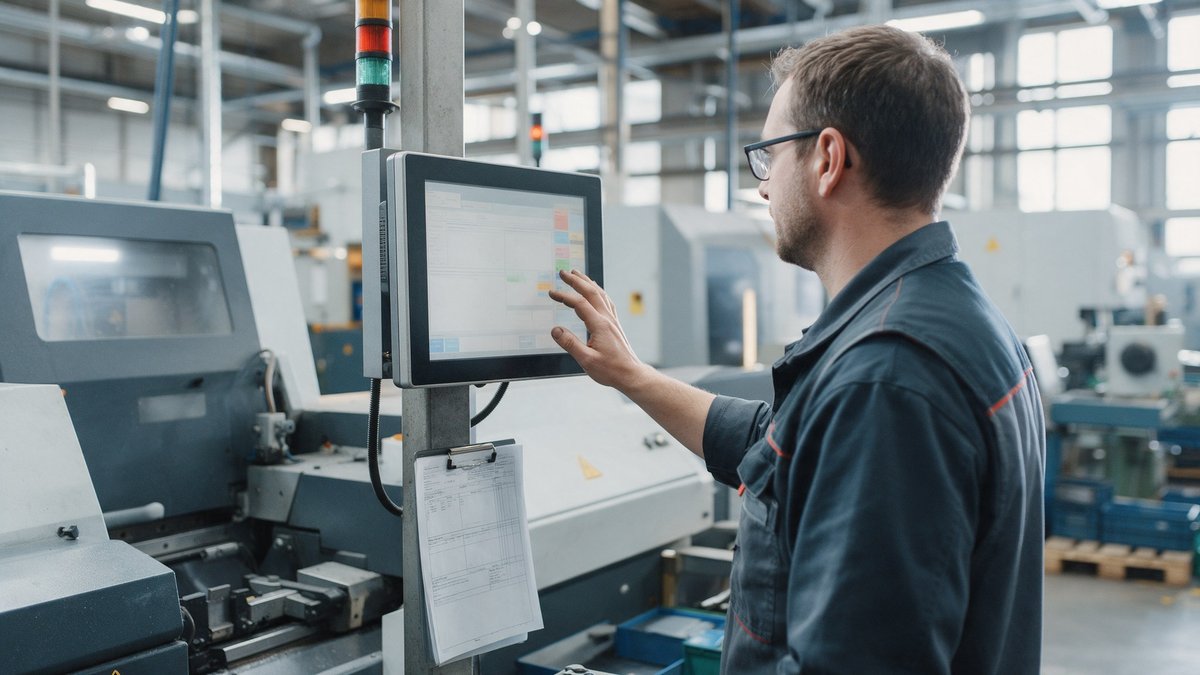
Manufacturing executives operate in a different reality. You are dealing with strict output targets, supply chain friction, and routine quality assurance bottlenecks that require steady human oversight. Workers are not being replaced by algorithms tomorrow. Instead, operations leaders are using targeted automation to clear out repetitive tasks like manual data entry and visual inspection logging, giving floor teams more room to handle critical escalations.
The Core Revelation: Acknowledging World-Destabilizing Potential
Internal Slack messages and political strife
The recent record-breaking public offering by Anthropic brought massive financial validation, but it also dragged internal leadership conversations into the open. A profile published in the Wall Street Journal detailed how top executives wrestled with the broader societal consequences of the technology they are building. These behind-the-scenes disclosures shifted the public conversation away from simple product features and toward the heavy weight of large-scale labor displacement.
According to leaked communications cited in the reporting, internal debates touched on the risk of widespread political unrest driven by vanishing employment opportunities. When major tech players discuss macroeconomic shocks in private channels, they are reacting to the sheer velocity of modern software deployment. For plant managers and operations leaders, reading these reports underscores a jarring truth about how creators view the downstream impacts of their own code.
There, he engaged in debates with his fellow employees, suggesting that immersive video games might be a solution for the political strife caused by AI-induced joblessness, according to widely circulated Slack messages.
Proposing virtual entertainment as a fix for mass economic displacement highlights a profound disconnect between Silicon Valley boardrooms and industrial realities. Factories do not run on immersive simulations. Operations rely on physical throughput, meticulous quality checks, and skilled human oversight to keep complex supply chains intact.
The gap between tech theory and operational reality
Translating theoretical software models into a functional production environment exposes the limits of speculative panic. While tech executives debate hypothetical societal futures in internal forums, shop floor leaders deal with immediate staffing shortages and rising error rates. The practical implementation of automation bears little resemblance to the abstract scenarios discussed by software architects.
Smart factories deploy software tools to handle repetitive administrative burdens rather than eliminating the workforce entirely. Quality managers use machine vision systems to catch microscopic defects faster than the human eye can manage. This targeted approach removes manual friction from the process without destabilizing the human element required for critical decision-making.
Focusing on concrete operational gains keeps manufacturing teams grounded while the software industry cycles through philosophical debates. Real return on investment comes from automating tedious paperwork, scheduling bottlenecks, and data entry tasks. Leaving the speculative theories behind allows industrial leaders to concentrate on proven improvements that protect both output quality and employee bandwidth.
Practical Application: Why Operations Leaders Must Focus on Elimination of Manual Work
Freeing up bandwidth for strategic work
Manufacturing and quality control teams spend an immense amount of time chasing administrative tasks, logging manual inspections, and reconciling disparate data sets. When leadership gets distracted by debates over AI labor displacement and speculative tech futures, daily plant floor bottlenecks remain completely unaddressed. Your staff needs relief from low-value data entry so they can focus on root-cause analysis, line optimization, and supplier quality issues.
Clearing routine administrative duties creates the operational capacity required to tackle bigger production challenges. Instead of managing endless spreadsheets, your best floor supervisors can redirect their attention toward equipment reliability and process waste reduction. Strategic work happens only when the team has the breathing room to step back from tactical firefighting and examine long-term yield metrics.
Targeting repetitive tasks rather than human roles
The discourse generated around the Anthropic IPO often frames technological advancement as an all-or-nothing proposition regarding employment. Wall Street Journal reporting highlighted how executives debated extreme societal outcomes, including comments where Dario Amodei discussed how immersive video games might be a solution for the political strife caused by AI-induced joblessness. That sort of speculation completely misses how modern plants actually operate on a day-to-day basis.
There, he engaged in debates with his fellow employees, suggesting that immersive video games might be a solution for the political strife caused by AI-induced joblessness, according to widely circulated Slack messages.
Operational improvement relies on targeting specific repetitive friction points instead of worrying about replacement narratives. Automating data aggregation, defect logging, and schedule tracking delivers immediate efficiency without disrupting the skilled personnel running your lines. Focusing strictly on task automation keeps your implementation grounded in practical value while ignoring theoretical noise.

Ready to find AI opportunities in your business?
Book a Free AI Opportunity Audit. It is a 30-minute call where we map the highest-value automations in your operation.
What ROI Actually Looks Like in Industrial AI Implementation
When manufacturing executives evaluate technology investments, they do not care about speculative headlines or boardroom debates over immersive video games. They look at throughput, defect rates, and operational margin. Real industrial returns come from replacing manual data aggregation with automated processing that catches quality variances before they turn into scrap.
Consider the financial reality behind large scale deployments. While tech coverage focuses heavily on the massive valuations and public offerings of foundational model builders like Anthropic, plant managers need to know what happens to their bottom line within six months. When you remove manual logging steps from a quality assurance workflow, labor hours immediately shift toward root cause analysis and line optimization.
Measuring success on the factory floor requires clear operational metrics rather than vague productivity promises. Operations leaders track specific financial markers to determine whether an automation project delivers value.
- First-pass yield: Measuring the percentage of parts meeting specifications without rework or secondary testing.
- Downtime reduction: Tracking the drop in unscheduled maintenance pauses caused by undetected component drift.
- Administrative overhead: Calculating the hours saved when reporting tasks transition from manual spreadsheets to automated data pipelines.
Putting these metrics into practice prevents teams from chasing shiny features that do not solve physical bottlenecks. The technology works when it integrates cleanly into existing shop floor software without demanding endless manual intervention from your best engineers.
Focusing on concrete operational gains ensures that technology spending directly supports your margins. When you eliminate routine friction from the plant floor, your quality managers spend less time chasing paperwork and more time keeping production running on schedule.
Source: theverge.com