

A recent Harvard University study revealed that 54% of the power driving America’s largest data centers comes from fossil fuels, generating carbon emissions that rival mid-sized nations. While Silicon Valley hyperscalers build energy-hungry models like Anthropic’s 20-megaton CO2 infrastructure, European operational leaders face a starkly different mandate. You cannot throw infinite compute and unbudgeted energy costs at manufacturing problems while meeting strict ESG requirements.
Unchecked AI energy consumption threatens to erode your margins and derail sustainability targets before your deployment even scales. This guide outlines how to bypass bloated hyperscale models and implement lean, purpose-built AI architectures that slash compute costs, satisfy compliance demands, and protect your operational ROI.
The Hidden Carbon Liability of Enterprise AI Deployments
Every unoptimized model running in your factory carries a compounding operational debt. While tech valuations soar, hyperscaler compute backbones quietly drive up scope 2 and scope 3 emissions. Deploying off-the-shelf deep learning systems tied to polluting facilities, such as xAI’s Colossus plant in Memphis, directly exposes your supply chain to strict European regulatory penalties.
Unchecked AI energy consumption turns plant-level automation into a direct financial liability. When grid tariffs spike and carbon border adjustments penalize high-emission operations, bloated software models quickly erode initial floor savings. Mandatory climate disclosures mean heavy compute footprints trigger immediate scrutiny from auditors. Smart operations leaders treat carbon overhead like scrap rates or equipment downtime, auditing compute workloads before scaling them across production lines.
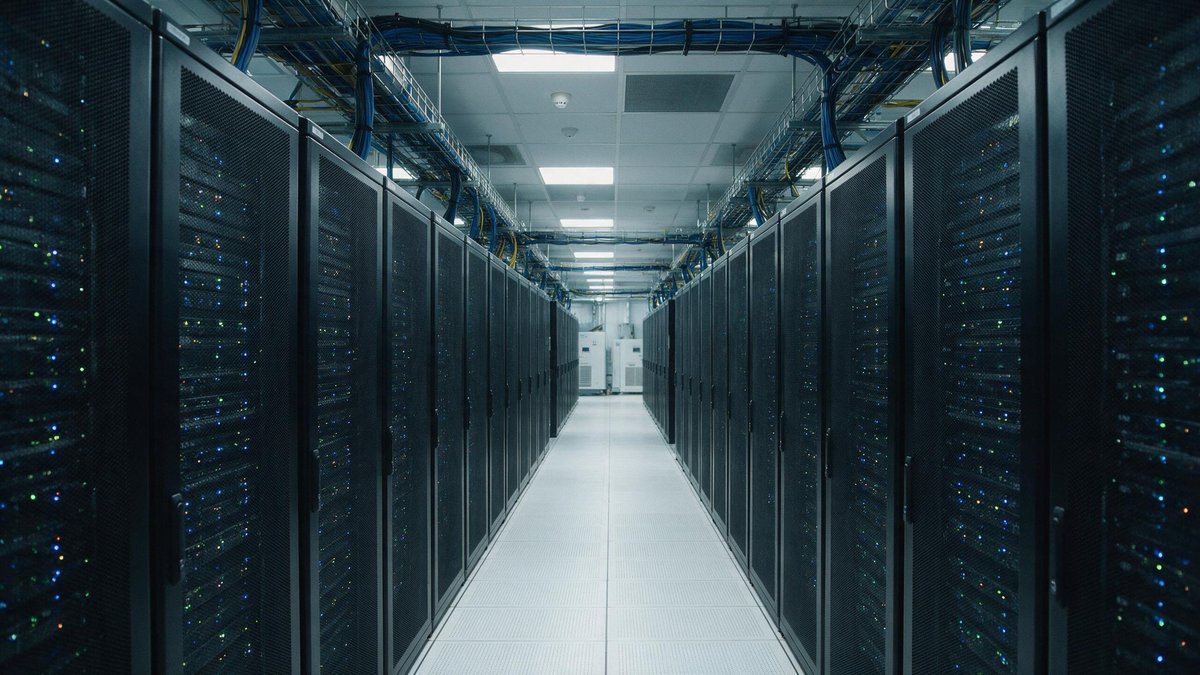
The Scale of the Compute Footprint: 2026 Data Center Emissions
The 54% Fossil Fuel Reliance in Data Center Energy Grids
A Harvard University study evaluating over 400 of the largest data centers in the United States highlights how deeply artificial intelligence infrastructure relies on legacy energy grids. Despite corporate commitments to net-zero operations, fossil fuels still generate 54% of the electricity powering these facilities. Instead of pacing infrastructure growth to match green power availability, legislative bodies are clearing the runway for rapid expansion. The U.S. Senate recently passed the BAAJA permitting reform bill, explicit legislation designed to roll back environmental protections and streamline data center construction.
This aggressive buildout directly clashes with corporate decarbonization goals. As computing demands scale, regional utility grids are forced to keep fossil plants online to satisfy peak power draw.
“Carbon Emissions of Biggest U.S. Data Centers Already Rival Entire Countries, Study Reveals.”
For industrial leaders managing strict supply chain requirements, grid composition is an immediate cost factor. Running operational workloads across cloud infrastructure backed by dirty power grids quietly inflates data center carbon emissions, complicating mandatory ESG reporting across your operations.
Hyperscaler Growth and the 20-Megaton Annual CO2 Projection
Commercial AI valuations are surging while their operational footprints expand unchecked. Anthropic netted over $81 billion on its first day of trading, driving the company’s valuation into the $1.3 trillion to $1.7 trillion range.
What Executives Get Wrong About AI Energy Efficiency
Why Chip-Level Efficiency Gains Don’t Solve Grid-Level Strain
Many operations leaders assume that newer hardware architectures will automatically neutralize their facility carbon footprint. They believe that faster processors and smaller transistors will reduce power draws enough to keep ESG metrics clean. That assumption ignores the core paradox of hardware evolution. When compute becomes more efficient, organizations simply deploy larger models and scale up workloads.
This behavior creates a rebound effect that completely swallows the engineering gains made at the silicon level. Semiconductor progress allows for denser computations, but enterprise demand scales up even faster. Relying on hardware efficiency alone is like buying a fuel efficient car and then driving cross country five times as often. The total energy draw on the grid continues to climb regardless of how many watts a single processor saves.
The Fallacy of Relying on Permitting Reforms and Deregulation
Another common mistake is assuming that legislative changes will clear the path for clean, abundant enterprise power. Lawmakers recently passed measures like the BAAJA permitting reform bill. This legislation aims to fast track the construction of massive energy infrastructure and data centers by stripping away environmental protections. Leaders often think this means grid capacity will effortlessly catch up to industrial demand.
That viewpoint misses the messy reality of what these facilities actually burn. When developers rush to build massive compute plants, they frequently plug directly into legacy fossil fuel sources because green energy generation cannot scale at that velocity. For example, massive upcoming infrastructure projects from major players like Anthropic face analysis showing they could emit nearly 20 megatons of CO2 equivalent per year. Deregulation does not build green transmission lines. It simply removes the red tape that keeps dirty power generation out of sight. Manufacturing executives must look past political promises and evaluate the real mix of the grid powering their operations.
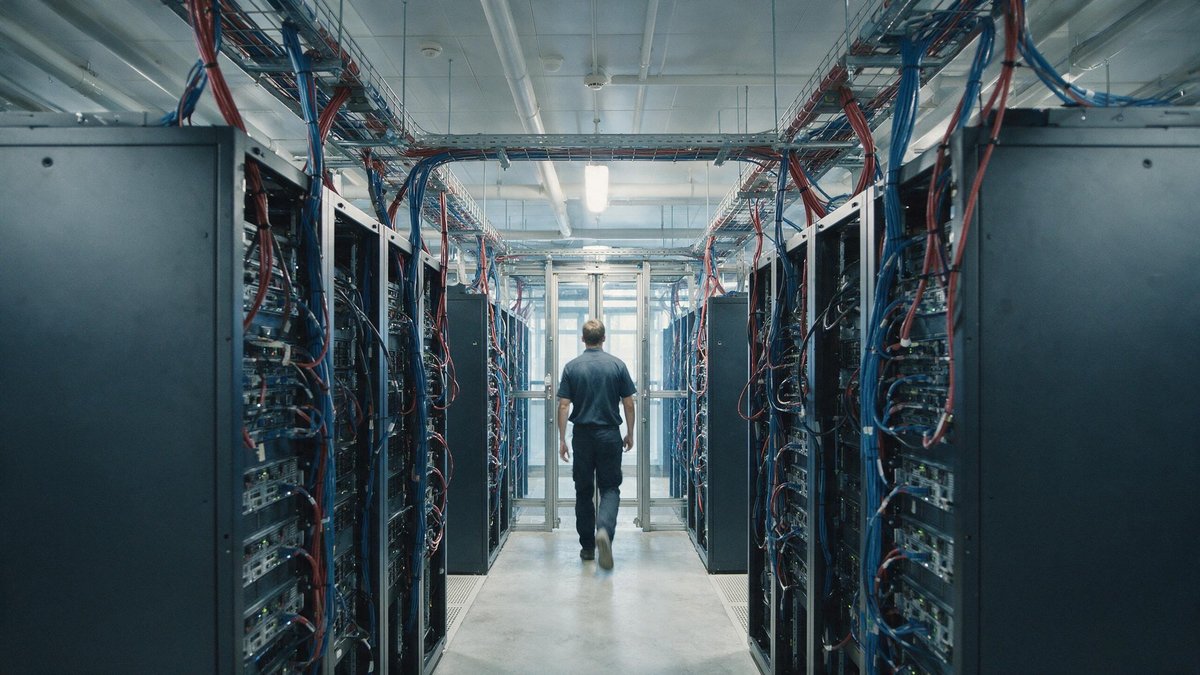
Pragmatic Architecture: Minimizing Carbon Footprints Without Sacrificing ROI
Model Right-Sizing over Massive General-Purpose LLMs
Manufacturing operations do not need trillion-parameter foundation models to inspect assembly lines or forecast supply chain bottlenecks. General-purpose models demand massive compute clusters and draw continuous power from fossil-fueled facilities. You can bypass this grid drain by deploying specialized, right-sized machine learning models trained strictly on your specific factory telemetry.
Smaller task-specific architectures run efficiently on local hardware without sending constant inference requests to centralized cloud servers. This targeted approach slashes your daily electricity consumption while delivering faster predictive outputs on the shop floor. You protect your profit margins from rising utility tariffs while keeping your operational workflows entirely self-contained.
Edge Deployment for Manufacturing Quality Control
Moving AI inference directly to the device level eliminates the energy penalty of round-trip cloud data transfers. Edge computing processes sensor and camera feeds right at the machine station. This local execution keeps your power requirements remarkably low compared to running heavy cloud pipelines.
Processing data locally also insulates your enterprise from the aggressive energy demands of massive hosting sites. When you stop routing every minor quality check through polluting infrastructure, your facility meets strict environmental reporting standards naturally. Sustainable performance emerges from smart system design rather than expensive carbon offsets.
Quantifying your carbon footprint requires tracking the actual kilowatt-hours consumed by every inference cycle on the factory floor. Operational leaders should audit existing server rooms and edge devices to establish a firm baseline for AI energy consumption before expanding automated workflows. Without concrete metrics, facility managers cannot prove compliance with tightening regional environmental regulations or justify infrastructure budgets to the board.
Hardware selection dictates how efficiently your operation converts electricity into useful computational output. Modern accelerators designed specifically for low-power edge environments deliver necessary analytical performance at a fraction of the thermal and electrical cost of traditional GPUs. Pairing these processors with pruned neural networks allows factories to run continuous predictive maintenance routines without straining local electrical substations. Procurement teams must prioritize hardware efficiency ratings alongside raw processing speed to protect both profitability and sustainability targets over the long term.
Ready to find AI opportunities in your business?
Book a Free AI Opportunity Audit. It is a 30-minute call where we map the highest-value automations in your operation.
Building Sustainable AI Infrastructure for Long-Term Enterprise Value
Aligning Enterprise Compute with European ESG Standards
European industrial leaders face mounting pressure to prove that every operational investment supports net zero targets. Regulators no longer accept vague corporate pledges regarding carbon reduction. Supply chain visibility requires hard metrics on the electricity driving your automated systems, particularly as legacy grids lean heavily on carbon intensive generation sources.
Ignoring this reality creates immediate compliance vulnerabilities across your operations. When infrastructure expansions mirror the fossil fuel reliance seen in massive U.S. developments, your enterprise inherits severe regulatory exposure. Building a sustainable architecture means measuring power draw alongside output accuracy from day one.
Balancing Execution Speed with Carbon-Efficient Model Design
Speed remains vital for quality control and predictive maintenance on the factory floor, but velocity cannot justify excessive power consumption. Heavy neural networks demand continuous high performance computing that stresses local power supplies and drives up scope two emissions. Shifting toward localized edge processing minimizes unnecessary data transmission and reduces thermal load.
Optimized workflows combine lean codebases with targeted hardware deployment to protect both profit margins and environmental mandates. Operational leaders who audit their compute pipelines today secure a distinct compliance advantage. You eliminate redundant processing steps, lower utility overhead, and maintain the agility required to scale automated production safely.
Factory floors and supply chain hubs do not need general purpose trillion parameter models running constantly in remote data centers. Right sized architectures rely on domain specific open weights models that execute specific industrial tasks with a fraction of the electricity. Running smaller models locally on specialized hardware keeps data inside your facilities while dramatically cutting total AI energy consumption. This approach aligns directly with strict European data sovereignty laws and corporate carbon accounting.
Procurement teams must update their vendor evaluation criteria to include power efficiency metrics alongside latency and throughput benchmarks. When you select hardware and software stacks designed for minimal thermal output, your facilities maintain high operational uptime without triggering costly grid upgrade mandates from local utilities. Sustainable computing ultimately depends on matching the scale of your models to the actual complexity of the industrial problem you are trying to solve.
Source: bloodinthemachine.com