What Atlassian Actually Launched (Plain Language)
Atlassian recently rolled out a significant expansion of AI capabilities inside Confluence, and if you missed the announcement, here is what actually shipped. The core update introduces AI agent Confluence functionality that goes well beyond simple text summarization or spell-check. These agents can autonomously navigate pages, read structured data, cross-reference content, and take action based on what they find — without a human manually triggering each step.
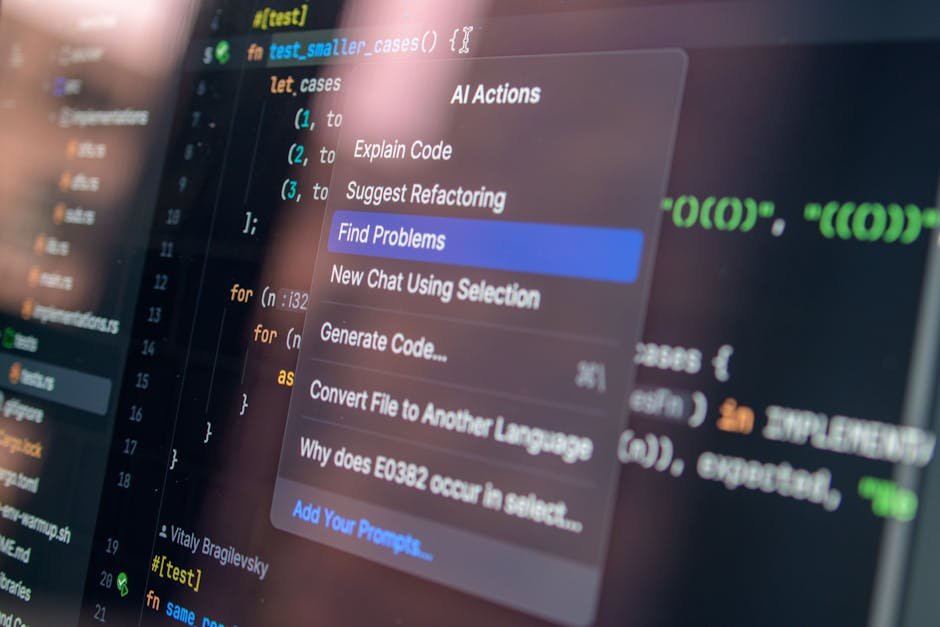
The visual AI tools include an upgraded editor experience that generates, reformats, and updates documentation from plain-language prompts. More importantly, Atlassian opened Confluence to third-party AI agents through an expanded integration layer. That means tools like CrewAI, Microsoft Copilot connectors, and custom-built agents can now read and write inside your Confluence workspace. Some of these capabilities are live today in premium and enterprise tiers; others are in controlled rollout through the second half of 2025.
What matters practically is the shift from AI as a writing assistant to AI as an operational participant. An AI agent Confluence integration no longer just helps someone draft a page faster — it can monitor a space, detect stale content, ping the right owner, and generate a replacement draft before anyone raises a ticket. That is a fundamentally different value proposition for operations teams.
Why This Matters If You Run Operations or Quality
Operations and quality leaders carry a documentation burden that grows faster than their teams. Standard operating procedures go out of date the moment a process changes. Audit trails get scattered across email threads, Jira tickets, and half-finished Confluence pages. Status reporting eats hours every week that nobody budgets for and nobody tracks. These are not edge cases — they are the baseline reality in most manufacturing and ops environments.
The new Atlassian AI tools map directly onto these failure points. Outdated SOPs are one of the most common findings in quality audits, and they are almost always a resourcing problem, not a knowledge problem. Your team knows the process changed; they just never had the time to update the documentation. An agent that monitors process-related pages and flags drift — or drafts the update automatically — removes that bottleneck without adding headcount.
Cross-team handoffs are another area where these capabilities land hard. When a corrective action moves from quality to operations to procurement, information gets lost or duplicated at every transition. AI automation operations workflows built on Confluence agents can track the handoff chain, surface the right context to each team, and log every touchpoint for future audits. That is not a theoretical future state — those workflows are buildable today with tools that are already in market.

3 Practical Ways to Deploy a Confluence AI Agent Right Now
1. Auto-Generate and Maintain Process Documentation
Set up an AI agent Confluence workflow that pulls from meeting notes, Jira tickets, and existing SOPs to generate first-draft documentation whenever a process changes. The agent monitors a designated project space, identifies pages marked as outdated or linked to recently closed change-management tickets, and produces a structured draft for human review. This is not about removing human judgment — it is about eliminating the blank-page delay that causes updates to sit in someone’s backlog for three months.
In practice, you can configure this using Atlassian’s native AI in premium tiers combined with an automation rule that triggers on page labels or Jira status changes. For more complex environments, third-party AI agents like those built on LangChain or CrewAI can be connected via the Atlassian API to handle multi-step logic. Start with one high-churn process — safety procedures, inspection checklists, or shift handover protocols — and build the template before scaling.
2. Trigger Quality Review Workflows Automatically
Quality review cycles are often delayed because someone has to manually identify that a document needs review, find the right reviewer, and send the request. An AI agent Confluence setup can handle all three steps. Configure the agent to check page metadata for review dates, cross-reference the owner directory, and create the Jira task or send the notification automatically when a deadline approaches or a linked process record changes.
This use case delivers compounding value. Every review that happens on time rather than two weeks late reduces audit risk and keeps your quality system defensible. Teams using automated review triggers in document-heavy environments typically report cutting review cycle time by 30 to 50 percent in the first quarter of deployment. That is a meaningful number when you are managing dozens of controlled documents across multiple product lines.
3. Surface Compliance Gaps Before Auditors Do
One of the highest-value applications of Atlassian AI tools is gap detection. An agent can scan your Confluence quality space against a stored compliance framework — ISO 9001 clause requirements, IATF 16949 control points, or your internal audit checklist — and flag pages where required content is missing, references are broken, or evidence records are absent. This is the kind of pre-audit sweep that currently takes a quality engineer two full days to run manually.
The output is a structured gap report, prioritized by risk level, that your team can act on before the external auditor arrives. AI automation operations at this level does not replace your quality engineer — it gives them a running start. Configuring this requires clear taxonomy in your Confluence space and a well-structured compliance template, but those are one-time setup costs against recurring monthly value.
What ROI Looks Like: Hours Saved, Errors Reduced
Let’s put realistic numbers on this. A mid-size manufacturing operation with a five-person quality team typically spends eight to twelve hours per week on documentation maintenance alone — updating SOPs, chasing reviewers, and formatting audit evidence. An AI agent Confluence deployment targeting those tasks conservatively reclaims four to six hours per week in the first month. At a fully loaded hourly rate of €60–€80 for a quality professional in the Netherlands, that is €960 to €1,920 per month in recovered capacity.
Error reduction compounds the return. Stale SOPs and missed review cycles create nonconformances. A single major nonconformance event — customer complaint, line shutdown, or audit finding — can cost €5,000 to €50,000 when you factor in containment, root cause analysis, corrective action, and customer communication. Preventing two or three of those events per year through better documentation discipline makes the ROI case unambiguous.
The strategic value is harder to quantify but arguably more important. When your quality and ops leads are not buried in documentation overhead, they are available for process improvement, supplier development, and cross-functional projects. Redirecting even two hours per week per person toward strategic work changes what those teams can deliver over a quarter. That is the real argument for Atlassian AI tools — not just efficiency, but organizational capacity.
Ready to find AI opportunities in your business?
Book a Free AI Opportunity Audit — a 30-minute call where we map the highest-value automations in your operation.
Conclusion
Atlassian’s AI agent launch is not just a product update — it is a signal that the documentation and workflow layer of your operation is now automatable at a level that was not practical twelve months ago. The AI agent Confluence capabilities available today are mature enough to deploy against real bottlenecks: outdated SOPs, slow review cycles, manual compliance checks, and fragmented audit trails. Waiting for the technology to mature further means leaving recoverable hours and avoidable errors on the table every week.
Operations and quality leaders who move now will build the internal fluency and configured workflows that compound in value over time. Those who wait will find themselves catching up while their peers are already redirecting bandwidth to work that actually moves the business forward. The entry point is lower than most teams expect — you do not need a large IT project or a dedicated AI team to start capturing value from third-party AI agents and native Atlassian capabilities.
If you want a clear picture of where AI agents can deliver the fastest wins in your specific operation, book a Free AI Opportunity Audit at falcoxai.com/audit. In 30 minutes, we will map your highest-value automation opportunities and give you a prioritized starting point — no generic frameworks, no sales pitch, just a practical assessment built around how your team actually works.