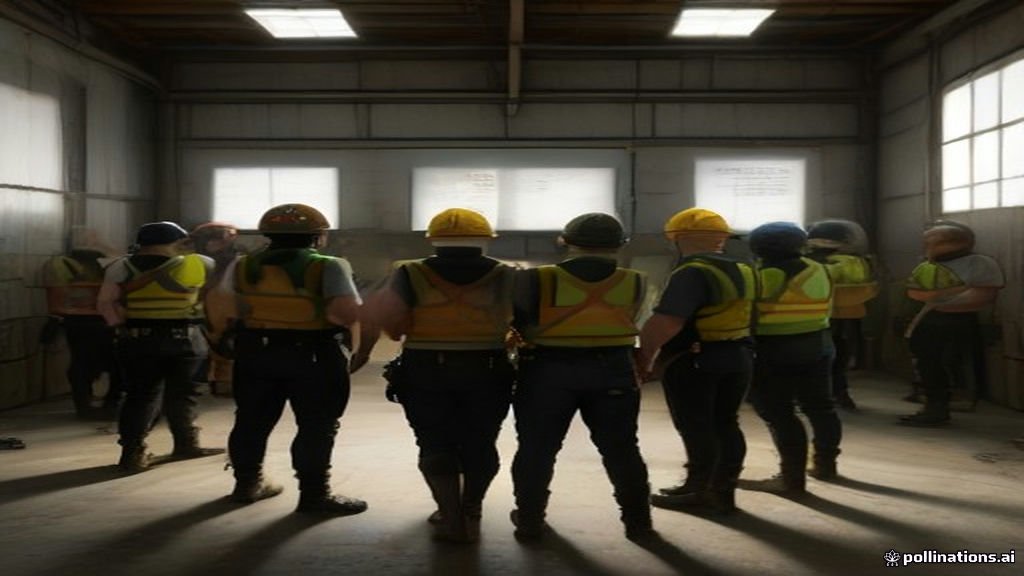

When executives tell their teams that AI will soon replace them, psychological safety dies instantly. Engineering leader Gregor Ojstersek warns that this dynamic ruins organizational trust and stalls performance. If you deploy automation tools in a low-trust environment, your people will actively resist the software to protect their jobs, destroying your technology investment.
This article provides the practical steps to build an AI productivity culture that yields real operational ROI. You will learn how to align your quality and operations teams, eliminate the fear of displacement, and turn automation into a tool that actually frees up your bandwidth for strategic work.
Why Mandating AI Productivity Backfires in Low-Trust Teams
Many executives treat automation as a headcount reduction tool. They announce software rollouts with careless statements that instantly alienate the workforce.
“This is very easy to build now that we have AI, and we don’t need as many people”
This phrasing kills organizational trust. In manufacturing, your quality and shop-floor operators possess the tribal knowledge required to train these systems. If they believe the technology is designed to replace them, they will quietly sabotage the implementation by feeding it poor data or ignoring the alerts. No amount of management pressure can force a successful rollout under these conditions.
True operational efficiency requires cooperation. When psychological safety is compromised, your investment fails. To build a genuine AI productivity culture, leaders must first prove that automation exists to eliminate manual drudgery, not their paychecks.

The Real Cost of Deploying AI Automation into Broken Workflows
Why tools amplify existing operational friction
AI does not correct broken processes. It speeds them up. If your quality engineers and plant supervisors communicate through defensive email threads and delayed shift logs, layering software on top of those handoffs only accelerates operational chaos. Automating an ill-defined operational workflow simply generates defective outputs at a faster rate.
In his 13-year career across engineering environments, industry leader Gregor Ojstersek observed how departments spend whole days blaming each other for problems rather than resolving root causes. When you introduce automated processing into an organization characterized by departmental finger-pointing, staff inevitably use the software output as a weapon. Quality control blames production for submitting flawed data, while production blames quality for establishing unrealistic thresholds. The technology becomes an added friction point instead of driving operational efficiency AI transformation.
The hidden tax of low psychological safety on AI adoption
In industrial operations, psychological safety in AI directly dictates whether shop-floor teams adopt new systems or actively bypass them. When technicians and line managers feel insecure, they protect their positions by withholding operational context, creating manual workarounds, and maintaining shadow spreadsheets. An algorithm cannot extract accurate root-cause analysis from a floor worker who fears that operational transparency will eliminate their job.
This friction creates a hidden tax that destroys your expected AI ROI in manufacturing. The financial penalty appears as abandoned software subscriptions, delayed implementation cycles, and polluted data pipelines. The operational divide between low-trust and high-trust environments becomes obvious during daily execution:
| Operational Dimension | Low-Trust Environment | High-Trust Environment |
|---|---|---|
| Data Integrity | Operators mask input errors to avoid individual penalty | Operators flag edge cases to improve model training |
| Process Handoffs | Departments spend whole days blaming each other for defects | Cross-functional teams refine shared automation rules |
| Tool Adoption | Workers maintain shadow spreadsheets in secret | Workers suggest new prompts to eliminate repetitive tasks |
Achieving real operational gains requires establishing trust before configuring software. When shop-floor technicians understand that automation targets repetitive manual work rather than their headcount, they proactively validate system outputs and refine automated rules. Until you fix internal communication and psychological safety, high-speed tools will only yield high-speed waste.
How Operations Leaders Build the Foundation for High-ROI AI
Reframing AI as bandwidth augmentation rather than head-count reduction
Plant executives must explicitly change how they communicate software initiatives to shop-floor teams. When leadership presents automation rollouts as cost-cutting drives aimed at reducing headcount, workers naturally protect their domain by withholding critical process knowledge. Operations leaders must state clearly that automation exists to absorb low-value administrative tasks, such as manual shift logging, batch record reviews, and compliance documentation.
Reframing this narrative requires concrete structural commitments from management. Quality managers and plant supervisors often spend up to forty percent of every shift managing paper records, filing deviation reports, and cross-referencing legacy spreadsheets. By demonstrating that automation returns that bandwidth back to process optimization and root-cause analysis, executive teams align business incentives directly with workforce security.
To shift internal perception effectively, leadership should adopt specific operational frameworks:
- Task shifting: Reallocate routine compliance logging to automated workflows while keeping operational decision rights with senior technicians.
- Capacity creation: Measure implementation success by the operational hours freed for preventative maintenance rather than staff hours eliminated.
- Skill elevation: Train operators to audit and fine-tune machine outputs, directly increasing their technical value to the plant.
When plant leadership skips these steps and introduces software into a low-trust environment, the tools inevitably fail. Workers who feel threatened will not help train the models. They withhold the subtle, unwritten operational nuances that make predictive maintenance or automated scheduling actually work. Instead of saving time, managers end up spending hours correcting bad inputs or dealing with silent resistance on the shop floor. Building a genuine AI productivity culture requires a foundation of psychological safety. If operators believe that a new software suite is a precursor to a layoff, they will feed it garbage data, run parallel paper tracking systems in secret, or simply ignore the automated recommendations. The software quickly becomes an expensive monument to management overreach.
Securing real operational ROI from automation starts with cultural alignment. Supervisors must actively demonstrate that sharing process knowledge is a career safeguard, not a threat. In a high-trust culture, a senior technician feels secure enough to teach the machine learning model how to spot a failing pump based on subtle vibration patterns. They know their value lies in diagnosing the problem, not in manually logging data every hour. When workers trust that their jobs are secure, they actively find ways to optimize the tools. This cooperative loop is what actually drives down cycle times and reduces scrap rates. Without this cultural baseline, even the most advanced algorithmic systems are nothing more than digital shelfware.
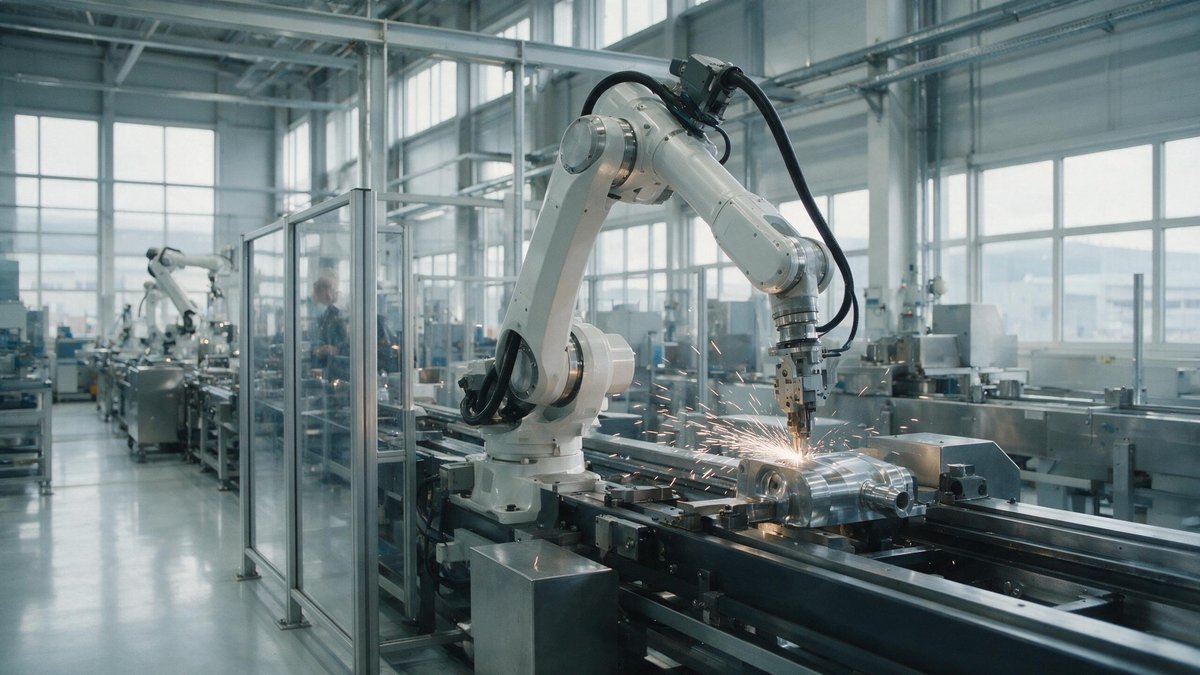
While many executives treat the generative AI boom as a purely technical integration puzzle, the most successful companies recognize that tool deployment is useless without organizational trust. Building a high-performing AI productivity culture means fostering psychological safety where employees do not fear being replaced by automation, but are instead incentivized to streamline their own workflows. When a company’s cultural foundation prioritizes continuous learning, team members actively seek out friction points to optimize rather than hiding inefficiencies out of fear of redundancy.
This human-centric approach is borne out by concrete market data, showing that technology alone is never a silver bullet. For instance, when financial technology giant Klarna integrated OpenAI’s technology to deploy an AI assistant, the tool successfully handled two-thirds of customer service chats in its first month, equivalent to the workload of 700 full-time agents, while actually improving customer satisfaction ratings. This massive shift was only possible because Klarna’s leadership had cultivated an adaptable AI productivity culture that embraced rapid disruption, proving that the ultimate hack for driving technical efficiency is a workforce that is culturally primed to evolve.
Ready to find AI opportunities in your business?
Book a Free AI Opportunity Audit. It is a 30-minute call where we map the highest-value automations in your operation.
Why Culture-First Organizations Will Win the AI Transformation Race
Synthesizes the strategic advantage of combining high-trust culture with pragmatic AI transformation to drive long-term business performance and strategic innovation.
Source: newsletter.eng-leadership.com