

When Apple hosted executives from Ford and Disney, the Mac Mini emerged as an unexpected favorite for one reason: enterprise AI hardware demand. Operations leaders are pulling AI workloads off public cloud infrastructure to protect proprietary data and reduce latency, causing months-long shortages for Mac Mini and Mac Studio configurations. If you are struggling to secure hardware for internal model execution, your automation timeline is at immediate risk.
This supply crunch proves that local, privacy-compliant AI execution is now a strategic requirement across plant floors and business operations. Below, we break down how to evaluate your compute needs, navigate current market bottlenecks, and build an enterprise AI hardware procurement strategy that keeps your systems running without waiting on backordered desktop clusters.
The On-Premise AI Rush Caught Hardware Giants Unprepared
For a decade, enterprise IT leaders were told that public cloud infrastructure was the only sensible home for modern software. Hardware vendors structured their product roadmaps around that assumption, treating desktop machines as basic endpoints rather than high-performance execution nodes. That cloud-first consensus has broken down under the weight of privacy requirements, network latency, and real-time processing demands on the plant floor.
The shift caught major tech vendors off guard. According to The Information, Apple lacked a dedicated business engineering team and possessed no enterprise AI strategy when corporate buyers began clearing out desktop inventory. When companies asked to access Apple’s Private Cloud Compute infrastructure, they were turned down, forcing operations teams to adopt partner execution environments like WebAI or source alternative enterprise AI hardware such as Nvidia’s DGX Spark.
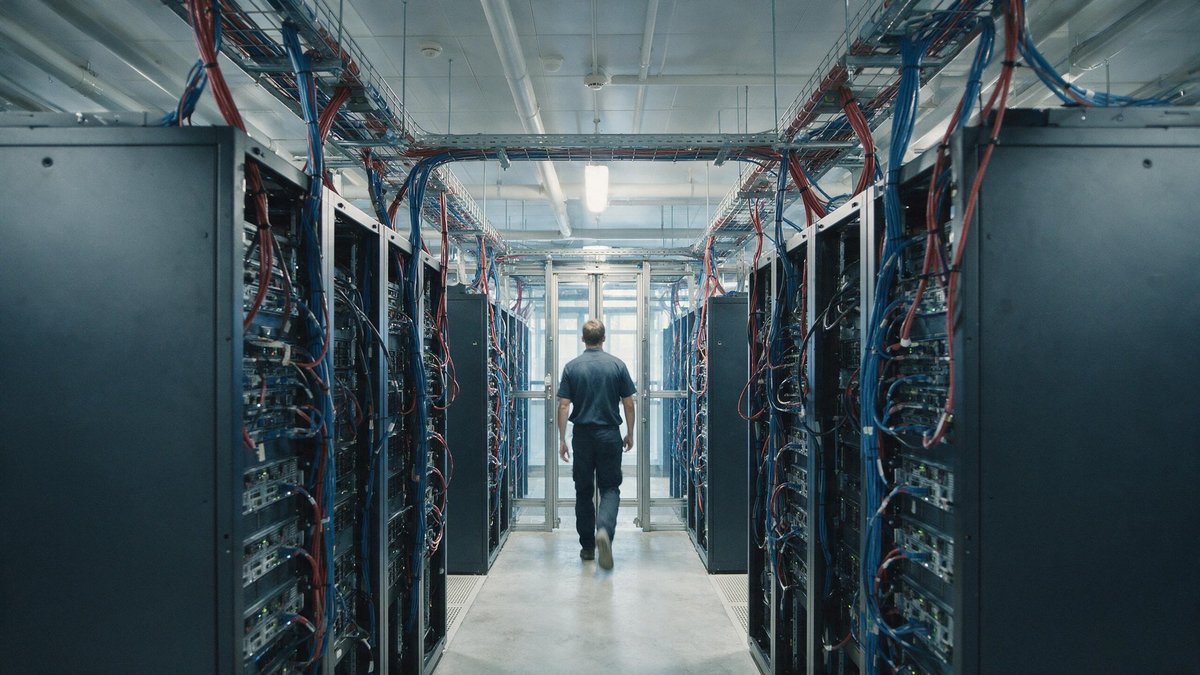
Inside Apple’s Unexpected Launch and Enterprise Supply Backlog
Unprecedented demand for clustered desktop hardware
Apple disrupted its standard autumn launch schedule by announcing updated Mac mini and Mac Studio systems in August, weeks ahead of its traditional product cycle. This accelerated timeline was driven by unexpected enterprise buying patterns. Commercial teams are purchasing high-specification desktop machines in volume, explicitly to link multiple units together into unified compute systems capable of executing large frontier AI models on local infrastructure.
Corporate requests for direct access to Apple’s Private Cloud Compute infrastructure were turned away, pushing organizations toward local execution environments. Apple relies on specialized software partners like WebAI and Mount Thor to deliver runtime environments optimized for Apple silicon. These platforms allow operations leaders to run on-premise AI models across clustered desktop hardware, giving facilities total control over local AI inference without transmitting operational data to external cloud networks.
Global memory bottlenecks and market alternatives like Nvidia DGX Spark
The surge in desktop hardware acquisition collided directly with a widespread global memory shortage. High-memory configurations of the Mac mini and Mac Studio quickly went out of stock, creating enterprise backorders that stretch for months. For manufacturing leaders deploying real-time quality inspection or operational automation, prolonged hardware delays stall execution timelines and delay expected efficiency gains.
Maintaining momentum requires building flexibility into your enterprise AI hardware procurement strategy. Many operations decision-makers are turning to alternative localized platforms such as Nvidia’s DGX Spark, a compact AI desktop designed for local model execution in a form factor similar to the Mac mini. Evaluating compatible hardware architectures early ensures your plant floor remains operational even during vendor supply shortages.
| Platform Option | Primary Deployment Model | Supply Risk |
|---|---|---|
| Clustered Mac Studio / Mini | Local execution via WebAI or Mount Thor platforms | High (Extended backlogs due to memory shortage) |
| Nvidia DGX Spark | Dedicated compact desktop AI inference node | Moderate (Alternative hardware supply chain) |
Why Operations Leaders Are Moving Workloads Off Public Cloud
Plant floor automation and quality management require immediate processing, absolute reliability, and total control over proprietary engineering data. Public cloud infrastructure fails to meet these operational standards when scaled across continuous, multi-shift manufacturing environments.
Data governance and the limits of closed cloud infrastructure
Factory operations cannot afford to depend on external internet connectivity to evaluate defect logs or run high-speed machine vision models. Transmitting raw quality inspection video feeds or proprietary process parameters offsite consumes massive network bandwidth, introduces millisecond latencies into tight cycle times, and creates serious data compliance risks for regulated manufacturers.
Local execution solves these constraints overnight. Operations teams are deploying Mac Minis and Mac Studios directly onto plant floors and facility server closets because Apple Silicon handles local AI inference with minimal power draw. The unified memory architecture in M-series chips allows these small systems to load mid-sized large language models and computer vision frameworks directly into fast system memory. This eliminates the bandwidth bottlenecks of cloud streaming while ensuring proprietary production data never leaves the local network boundary.
This shift forces procurement managers to rethink their enterprise AI hardware strategies. Traditional data center setups demand dedicated rack servers, specialized cooling, and expensive graphics cards that often sit backordered for months. A cluster of Mac Studios or Mac Minis delivers comparable local inference performance at a fraction of the hardware cost and power envelope. Instead of signing multi-year cloud contracts with unpredictable token fees, IT procurement can purchase modular units as standard capital expenses.
By running models on site, companies achieve strict data privacy compliance. Quality assurance metrics, confidential CAD drawings, and operator logs remain air-gapped from public AI model training sets. Operations leaders get predictable, low-latency response times for real-time defect detection without paying continuous cloud processing costs. Deploying compact desktop silicon for localized workloads has quickly become a pragmatic standard for modern facilities.

Building an Agile AI Infrastructure Strategy Amid Supply Shortages
Multi-vendor silicon planning for edge inference
Waiting months for specific high-performance desktop configurations halts plant floor automation projects and delays quality inspection rollouts. Operations executives must establish a multi-vendor strategy to keep local AI inference projects moving when primary hardware supply lines stall.
Standardizing on a single hardware vendor creates severe operational risk during persistent global supply shortages. When high-end Apple desktop configurations face months of backlogs, forward-thinking teams pivot to alternative compact enterprise AI hardware options like Nvidia’s DGX Spark to maintain their planned deployment schedules.
| Hardware Platform | Primary Operational Strengths | Procurement Risk Profile |
|---|---|---|
| Apple Mac Mini / Studio | Unified memory architecture for large local models | Extended stock shortages and backlogs |
| Nvidia DGX Spark | Compact form factor with native CUDA acceleration | Subject to enterprise allocation constraints |
Designing your local model execution pipelines to run across varied chip architectures ensures that procurement bottlenecks from a single supplier do not freeze quality control upgrades or line automation timelines on your factory floor.
This surge in demand highlights a broader shift away from public cloud infrastructure. Operations leaders are pulling computer vision, proprietary data processing, and real-time inference back onto physical facility floors. Public cloud platforms introduce recurring data egress fees, high network latency, and regulatory compliance headaches when processing sensitive operational data or proprietary video feeds. Running small language models and vision systems directly on local enterprise AI hardware ensures that sensitive operational IP never leaves the building. It also eliminates the risk of cloud service outages disrupting physical assembly lines.
Smarter procurement strategies require IT managers to treat these compact desktop machines like micro-servers rather than standard office workstations. IT teams should pre-qualify model quantization frameworks (such as GGML or ONNX Runtime) across different chipsets before bulk orders are placed. Staggering purchase orders across regional distributors and maintaining a baseline pool of chip-agnostic mini-PCs prevents deployment delays. When privacy mandates force AI workloads off the cloud, localized hardware flexibility becomes the primary factor in keeping projects on schedule.
Ready to find AI opportunities in your business?
Book a Free AI Opportunity Audit. It is a 30-minute call where we map the highest-value automations in your operation.
The Future of Industrial Operations Driven by Local Silicon
The sudden enterprise run on high-performance desktop silicon signals a permanent structural shift in industrial architecture. Local edge compute is no longer a lightweight gateway designed merely to pass raw telemetry to distant cloud platforms. High-density compute nodes installed directly alongside production lines are rapidly becoming standard operational equipment for real-time automation and inline quality control. Companies that delay this transition risk locking their core operational logic behind external network dependencies.
Industrial software ecosystems are adjusting quickly to this localized execution paradigm. Dedicated platforms such as WebAI and Mount Thor demonstrate how modern enterprise toolchains are built specifically to execute models on local hardware rather than relying on public cloud APIs.
Procurement teams historically viewed Mac Minis and Mac Studios as creative workstations. Today, operations leaders deploy them into custom rack enclosures across factory floors and distribution hubs. Apple’s unified memory architecture allows these compact systems to run high-parameter vision and language models locally at a fraction of the cost of dedicated rack-mount GPUs. Memory bandwidth matters more than raw compute when streaming continuous vision feeds from inspection cameras, making unified memory a practical alternative to enterprise AI hardware setups that require specialized cooling and heavy electrical infrastructure.
Local processing eliminates the data sovereignty risks inherent in sending sensitive visual telemetries or proprietary operational datasets to cloud providers. Video feeds from security cameras, proprietary schematics, and confidential product metrics stay entirely within physical plant boundaries. Removing external API calls also eliminates latency spikes, ensuring that visual quality control algorithms trigger gate rejectors in milliseconds rather than waiting for external network responses.
This movement forces IT and operations departments to rebuild their enterprise AI hardware strategies around off-the-shelf availability. Buying low-power desktop nodes in small batches gives procurement teams immediate hardware delivery, avoiding the multi-month lead times typical of traditional enterprise server chassis. Decentralized deployments allow facilities to scale compute capacity incrementally per production line, matching hardware capital expenditure directly to physical operational growth.
Source: macrumors.com