
Apple’s overhaul of its AI architecture is more than a headline. This 2026 move, announced by Hartley Charlton, sees Apple Intelligence rebuilt around foundation models co-developed with Google, using the same technology that powers the Gemini family. Privacy is front and center: Apple insists user data is isolated, with outside experts allowed to verify claims at any time. But the real shift for manufacturing operations isn’t in privacy alone, it’s in the massive expansion of AI capabilities, system-wide intelligence, advanced reasoning, and multimodal image generation, now available both on-device and in Apple’s secure cloud infrastructure.
If you manage quality or operations, these technical upgrades have practical consequences. This article breaks down what Gemini-powered Apple AI architecture means for your business, which features are relevant, and how to actually put these advancements to work in your workflows.
Why Apple’s New AI Architecture Signals a Power Shift in Enterprise AI
Apple’s 2026 move with Google puts real muscle behind enterprise AI expectations. By directly integrating Gemini models into the Apple Intelligence platform, Apple is forcing a split: businesses get more power, but every upgrade renews the battle between capability and privacy. Manufacturing leaders who want advanced image generation and reasoning will see a jump in system-wide intelligence, but they need to weigh that against how data is isolated and handled.
This collaboration is not just about new features, it changes what organizations demand from AI vendors. As Apple builds on Private Cloud Compute, “outside experts can verify those privacy guarantees at any time,” making privacy scrutiny part of daily operations. The line is clear: if your AI provider can’t deliver both performance and trusted privacy, expect scrutiny from your stakeholders, and questions about risk.

What Apple Actually Announced: Foundation Models and System Orchestrator
Co-development with Google: How Gemini tech fits in
Apple’s update is specific: Foundation Models built using Google’s Gemini technology are now integrated at the heart of Apple Intelligence. This approach means Apple is not building on old AI tools or basic assistants, but rather on a set of models co-developed with Google and tuned for Apple’s hardware and Private Cloud Compute. These models have multimodal strengths, image creation, photo editing, and visual question answering are now possible, at scale, on Apple devices.
- Gemini’s role: Google’s Gemini family provides model architecture and core reasoning capabilities.
- Adapted for Apple: Apple Foundation Models are re-engineered so they work both on-device and in Apple’s secure Private Cloud Compute environment.
- New use cases: Manufacturing teams can expect upgraded image creation and advanced photo analysis, not just for consumer features, but for operational data and documentation needs.
Role of the system orchestrator across Apple’s platforms
Apple introduced a dedicated system orchestrator, which is not just middleware, it coordinates every AI function across iOS, macOS, and iPadOS. The orchestrator runs in the background, detecting which app is active and which task the user is trying to complete, then tailoring Apple Intelligence to those specifics. This is a shift away from siloed AI features.
| Old Model | Revised Architecture |
|---|---|
| Single-app AI | System-wide, context-aware AI |
| Manual toggling | Automated orchestration |
This means manufacturing leaders can expect AI to handle context switching on the fly, with fewer manual overrides and less wasted input. The orchestrator’s design reduces friction and supports real workflows, not just flashy demos.
Enterprise Impact: Privacy, Multimodality, and On-Device AI
Private Cloud Compute and privacy guarantees
Manufacturing leaders have reason to scrutinize Apple’s approach to data handling. Apple is using Private Cloud Compute to process requests, keeping sensitive workflow data off broader cloud platforms. The company’s stance is explicit: user data is only used for immediate tasks and remains inaccessible to both Apple and third parties. Outside experts may verify these privacy claims “at any time,” a rare concession in enterprise AI. If your operations demand tight control over proprietary processes or traceability, this model offers concrete compliance benefits. However, enterprises must still validate integration points and audit mechanisms internally before trusting critical workloads to Apple Intelligence.
Multimodal support for manufacturing and quality teams
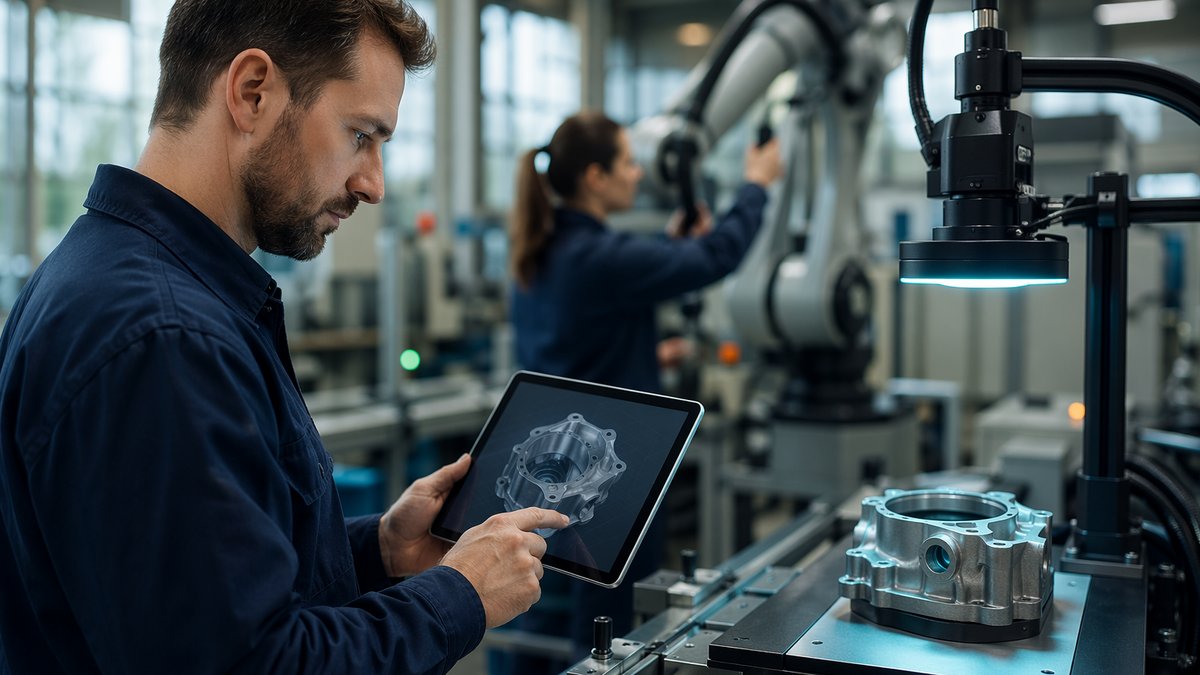
Apple’s embrace of multimodal AI architecture is practical for line-side automation. Teams now have direct access to advanced photo editing, image creation, and visual question answering baked into the platform. For quality managers, this means faster defect detection, digital work instructions, and real-time analysis of production images. Operations leaders can expect workflows that skip manual sorting or annotation. The foundation models developed with Google Gemini shift from generic assistant features to actionable, industry-ready tools. Limitations remain if input formats or images require specialized domain adaptation, so assessment is needed before broad rollout.
Device eligibility and infrastructure considerations
Not every Apple device will support the full set of AI features. Higher-power versions are limited to specific devices, with Apple yet to clarify eligibility. Before investment, operations teams should map their device fleet against Apple’s rollout. Mixed environments, older hardware alongside new, may lead to capability gaps. Infrastructure teams must verify that their network and storage configurations align with Apple’s Private Cloud Compute requirements. For factories with legacy systems and tightly controlled workflows, upgrade paths may involve both hardware and system integration planning.
How This Differs from Other AI Platform Upgrades
Apple vs. competitors: Strategic differences
Apple’s approach stands apart by combining a Gemini-based AI foundation with zero-compromise privacy. Google has previewed “Gemini Intelligence” for Android, and Microsoft is pursuing multimodal AI in Copilot and Azure OpenAI. But Apple’s integration uses Google’s models inside its own architecture, then restricts data with Private Cloud Compute. Neither Google nor Microsoft offers outside expert verification of privacy claims “at any time.” Apple also puts the system orchestrator front and center, coordinating responses across apps and devices. This coordinated intelligence is not matched by rivals, who typically build app-specific AI without true system-wide control.
| Vendor | Core Model | Privacy Approach | System Integration |
|---|---|---|---|
| Apple | Gemini-based, co-developed | Private Cloud Compute, external audit | System orchestrator, cross-platform |
| Gemini | Cloud processing, internal privacy controls | App-level AI, Android-centric | |
| Microsoft | OpenAI/own models | Enterprise controls, cloud-driven | Copilot in apps, Azure workflow |
Potential blind spots or tradeoffs for business leaders
This new Apple AI architecture gives leaders more power in multimodal and reasoning tasks. However, the privacy-first design limits how data leaves the local system. Some manufacturing businesses might find this restrictive if they need broader sharing across platforms or vendors. The high-permission orchestrator brings efficiency, but it depends on strict data silos, so integration with other enterprise systems could be complicated. Leaders should weigh Apple’s controls against operational flexibility. Advanced capabilities are only available on select devices, so rollout will require careful hardware mapping.
What This Means for AI ROI in Manufacturing and Operations
Manual work reduction and efficiency gains
The new system orchestrator and multimodal models translate directly into fewer repetitive tasks. Realistic image creation and visual question answering, now possible at scale with Apple’s Gemini-based platform, mean QA teams can automate defect spotting and root cause analysis. Operations leaders can expect faster data annotation, quicker report generation, and improved dictation accuracy. That means fewer hours spent on documentation and manual checks, and more time freed for critical tasks.
Where to pilot new features for business value
Initial pilots should target high-volume, error-prone workflows. Use advanced photo editing and image understanding in production lines where visual inspection is complex. Start with tasks where humans are bottlenecks: quality control, process documentation, and speech-driven work instructions. Prioritize teams familiar with Apple devices, as certain models promise enhanced capabilities, but confirm compatibility, Apple has not specified device requirements in this release.
Short-term vs. long-term ROI expectations
Short-term ROI comes from automating obvious manual chores: image generation for documentation, data extraction, and simple visual QA. Expect measurable gains within months, a reduction in errors and time spent on routine tasks. Long-term ROI shifts to system-wide intelligence, with scalable improvements as Apple Intelligence matures. Secure orchestration and Private Cloud Compute set up a foundation for process redesign. Privacy assurances may justify moving sensitive operations onto the platform, but sustained gains require ongoing evaluation of new Apple Intelligence features as they expand through updates.
Ready to find AI opportunities in your business?
Book a Free AI Opportunity Audit. It is a 30-minute call where we map the highest-value automations in your operation.
Looking Ahead: How Apple and Google’s Deep Collaboration Will Shape Industrial AI
Evolving workforce expectations for AI
The partnership between Apple and Google on Gemini-based AI raises the bar for what teams now expect from enterprise platforms. Manufacturing staff will soon take for granted intuitive image analysis, advanced dictation, and real-time visual QA. The Apple Intelligence platform will drive demand for more interactive AI assistants that work across devices, not just inside isolated apps. Leaders need to track employee requests for automated data annotation and more dynamic workflows, as these are direct signals of rising expectations.
As Apple described the Gemini collaboration as a “huge upgrade,” operations teams should prepare for a shift where AI-powered reasoning and system-wide intelligence are baseline, not premium extras. This means specialists will expect AI to assist with root cause analysis and predictive quality tasks, without manual prompting.
When (and if) to plan for deeper Apple-Google AI rollouts
No company wants to jump ahead of stability, especially with enterprise-critical workflows. Apple’s announcement leaves open which devices will get the most powerful model. Operations leaders should wait for clear guidance on hardware eligibility and Private Cloud Compute integration before committing to full-scale rollouts.
- Device qualification: New capabilities depend on device support. Leaders need to confirm which endpoints in their fleet are compatible, as Apple has not yet specified.
- Privacy verification: Apple promises outside expert verification “at any time.” Teams should factor this transparency into vendor assessments and internal audits.
- Feature maturity: Manufacturing applications, like visual question answering or speech accuracy, should be tracked for proven reliability before being built into core workflows.
Early experimentation is valuable for QA and pilot projects, but strategic planning should wait until Apple finalizes its device list and maturity roadmap. This is a prudent way to balance innovation with operational risk.
Source: macrumors.com