

Dario Amodei, CEO of Anthropic, has warned that AI could eliminate half of white-collar jobs and push unemployment to 20 percent. Yet, current data shows no such upheaval. Unemployment rates for workers most exposed to AI have risen only slightly, 0.77 percentage points since 2022, no faster than for those least exposed. The reality is more nuanced than the headlines suggest. You need clear, actionable insights to navigate AI’s real impact on jobs and productivity. This article cuts through the noise with data-driven analysis and practical takeaways for professionals facing this transformation.
The AI job apocalypse: hype vs. reality
Media headlines and AI executives frequently warn of an impending “AI jobs apocalypse,” with some predicting mass unemployment. Dario Amodei, CEO of Anthropic, has even suggested AI could eliminate half of white-collar jobs. But the data does not support such extreme outcomes. Unemployment rates for workers most exposed to AI have not risen significantly faster than for others. The reality is that AI is not wiping out jobs, at least not yet. The fear of total disruption is outpacing the actual impact. This gap between hype and reality demands a more measured, evidence-based approach to understanding AI’s role in the labor market.
The current labor market shows only minor shifts, not the dramatic upheaval some predict. AI may be reshaping work, but not eliminating it. The real challenge lies in managing expectations and preparing for gradual, rather than sudden, change. This is where practical, data-driven strategies make the difference.
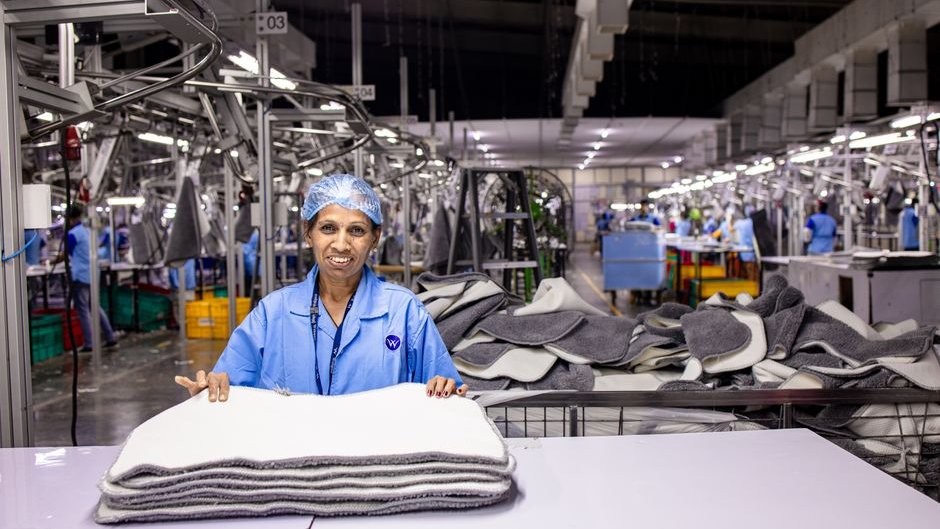
AI’s impact on overall employment is likely small
Unemployment trends by AI exposure
Unemployment rates for workers in the most AI-exposed occupations have increased slightly, but not significantly faster than for those in less exposed roles. From 2022 to 2026, the unemployment rate for the top quintile of AI-exposed workers rose by 0.77 percentage points, compared to 0.85 percentage points for the least-exposed group. This suggests AI is not accelerating job loss in any particular segment of the labor market.
No significant job loss in high-exposure sectors
Employment trends in high-AI-exposure occupations remain stable. Despite fears of large-scale displacement, data shows no major decline in job postings or employment in these sectors. This stability indicates that AI is not yet acting as a major driver of unemployment in the labor market.
Aggregate labor market trends
The overall labor market is softening, but not due to AI. Unemployment is rising across all groups, with no evidence pointing to AI as a primary cause. This broader trend suggests that AI’s influence on employment is still limited, and its long-term impact remains to be seen.
A tough job market for graduates may be partly due to AI
AI and the graduate employment gap
Recent graduates are facing a tougher job market, and AI may be a contributing factor. Companies are increasingly using AI tools to streamline hiring, which can reduce the number of entry-level positions available. This shift is not eliminating jobs entirely but is altering the landscape for new entrants.
Shifts in required skills and competencies
The skills demanded by employers are changing. Technical skills such as data literacy and AI fluency are becoming more important, while soft skills like adaptability and critical thinking are also in higher demand. Graduates who lack these competencies may find themselves at a disadvantage.
Impact on hiring practices
AI is reshaping how companies hire. Algorithms now screen resumes and conduct initial interviews, which can reduce bias but also make it harder for candidates to stand out. This means graduates must tailor their applications more carefully than ever before to be noticed.

AI’s mixed but generally positive impact on worker productivity
Productivity gains in AI-adopted firms
Companies that have integrated AI into their workflows report measurable productivity gains. These improvements are most visible in tasks that involve data processing, pattern recognition, and repetitive decision-making.
Examples of AI-driven efficiency improvements
In manufacturing, AI-powered predictive maintenance systems have reduced downtime by up to 25 percent in early adopters. In quality control, computer vision tools detect defects faster and with greater accuracy than human inspectors. These are not isolated cases, similar gains are being reported across sectors.
Challenges in measuring productivity impact
Measuring the full impact of AI on productivity remains complex. Some benefits are indirect, such as improved data quality or faster access to insights. These are harder to quantify but still contribute to long-term efficiency gains.
Firm adoption of AI is accelerating, but unevenly
AI adoption trends across industries
AI is being adopted at different rates across sectors. Manufacturing, logistics, and quality control have seen early and measurable progress, while other industries lag. Some firms are integrating AI tools into daily operations, but others are still in the early stages of exploration.
Barriers to AI implementation
Many organizations face hurdles such as lack of expertise, high upfront costs, and data quality issues. These challenges slow down adoption, especially for smaller firms or those in traditional sectors. Without clear ROI, investment in AI remains hesitant.
Early adopters and their advantages
Companies that have moved quickly to adopt AI report clear benefits, including higher productivity and better decision-making. These firms are gaining a competitive edge, often outpacing peers who are still evaluating AI’s potential. The gap between early adopters and laggards is growing, with measurable impacts on performance and market position.

Ready to find AI opportunities in your business?
Book a Free AI Opportunity Audit. It is a 30-minute call where we map the highest-value automations in your operation.
What people get wrong about AI and jobs
Myth: AI is causing massive job loss
Despite predictions from figures like Dario Amodei of Anthropic, current data shows AI is not causing significant job loss. Unemployment rates for AI-exposed workers have risen only slightly, 0.77 percentage points since 2022, and at the same rate as for less exposed workers. The so-called “AI jobs apocalypse” is not materializing in the labor market today.
Myth: AI replaces all human roles
AI is not replacing entire roles, but rather augmenting them. In manufacturing, for example, AI tools like computer vision improve quality control without eliminating the need for human oversight. Jobs are evolving, not disappearing, and the skills required are shifting toward data literacy and AI fluency.
Myth: AI adoption is uniform across sectors
AI adoption is uneven. Early adopters in manufacturing and logistics see measurable benefits, while other sectors lag. Barriers such as data quality and expertise slow adoption, especially for smaller firms. This uneven progress means AI’s impact on jobs is not the same everywhere.
Looking ahead: AI and the future of work
Future trends in AI and employment
AI’s long-term impact on employment is still unfolding. While current data shows minimal disruption, future trends may depend on how quickly AI adoption spreads across sectors and how well workers adapt. Early adopters in manufacturing and quality control have seen measurable gains, but other industries may lag due to barriers like cost and expertise. The labor market could shift toward roles that require human oversight, creativity, and complex problem-solving.
Policy considerations for AI adoption
Policymakers must balance innovation with workforce protection. Clear regulations around AI deployment can ensure fair competition and prevent displacement of vulnerable groups. Incentives for firms that invest in upskilling employees alongside AI integration could help smooth the transition. Without thoughtful policy, the benefits of AI may be unevenly distributed, deepening inequality.
Opportunities for reskilling and upskilling
Workers in AI-exposed roles must prepare for evolving job requirements. Skills in data literacy, AI fluency, and system management are becoming essential. Companies that invest in reskilling programs now will be better positioned to retain talent and drive productivity. As Dario Amodei of Anthropic has warned, the future of work will demand adaptability, but the path forward is not one of wholesale job loss, it’s one of transformation.
Source: siepr.stanford.edu