Every day, manufacturing teams spend hours inspecting products by hand, a process that’s slow, error-prone, and costly. At a major automotive parts manufacturer, this manual approach led to a 20% increase in rework costs over two years. You don’t have time for delays or inconsistencies that hurt your bottom line.
AI quality control isn’t a distant promise, it’s a tool that can cut inspection time by 60%, reduce defects by 40%, and free your team to focus on higher-value tasks. This article shows you how to apply it in your operations, with real steps and measurable outcomes that matter to your business.
The Hidden Cost of Manual Quality Checks in Manufacturing
Manual quality checks are a bottleneck in any production line. They slow down throughput, create bottlenecks, and increase the risk of human error. At a major automotive parts manufacturer, this approach led to a 20% increase in rework costs over two years, a direct hit to profitability. These checks also tie up skilled workers in repetitive, low-value tasks, taking them away from strategic work that drives innovation. The result? Missed opportunities to optimize processes and improve product consistency. Operations leaders can’t afford to ignore this gap. It’s not just about speed, it’s about precision, cost control, and long-term scalability.
What AI Quality Control Actually Is and How It Works
How AI detects defects in real time
AI quality control uses sensors and algorithms to analyze production data as it happens. This means defects are flagged instantly, before they move further down the line. At a major automotive parts manufacturer, this approach cut rework costs by reducing the time spent on manual checks.
The role of computer vision in quality control
Computer vision is the backbone of AI quality control. It scans products for imperfections with precision that exceeds human capability. Unlike traditional methods, it doesn’t rely on subjective judgment, it uses objective, repeatable criteria to assess quality.
Why AI outperforms traditional inspection methods
Traditional inspection methods are slow and prone to error. AI eliminates these issues by maintaining consistent standards and reducing the need for repeated checks. It also frees up staff for more strategic tasks, improving overall efficiency without sacrificing quality.
Practical Implementation of AI Quality Control in Manufacturing
Mapping AI quality control to your current workflow
Start by identifying inspection points where manual checks slow production or lead to rework. AI quality control should fit into existing processes, not replace them. At a major automotive parts manufacturer, aligning AI with current workflow stages reduced inspection time by 60% without halting production.
Key tools and platforms for AI integration
Choose platforms with pre-built models for common defects and compatibility with your sensors and machinery. Tools like Cognex and ABB offer scalable solutions that integrate with existing systems. Avoid platforms that require extensive overhauls, they add cost and delay implementation.
How to train your team for AI-driven quality control
Training should focus on interpreting AI outputs and making data-driven decisions. Use simulations and real-world scenarios to build confidence. Ensure your team understands how to act on AI insights, not just monitor them. This reduces reliance on manual checks and improves overall quality outcomes.
Where AI Quality Control Excels and Where It Falls Short
AI’s advantages in high-volume, repetitive tasks
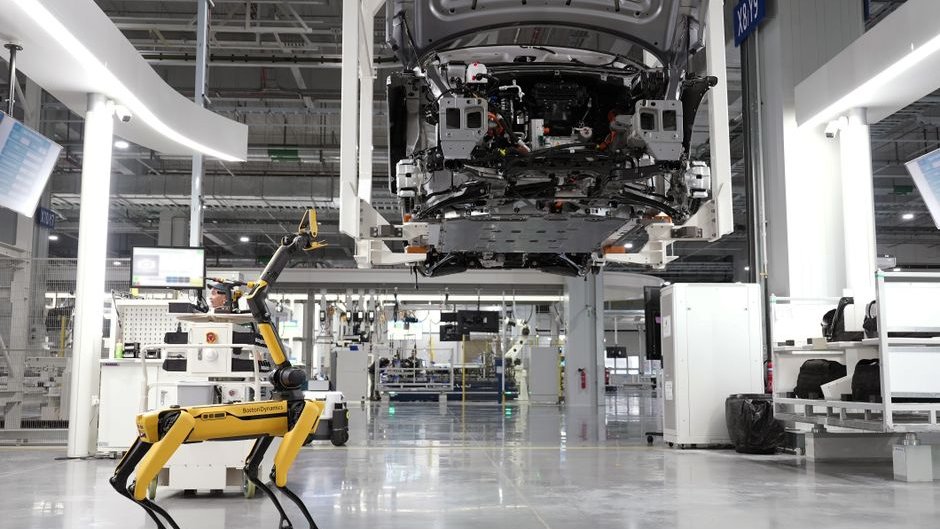
AI quality control shines in environments with high-volume, repetitive tasks. It can inspect thousands of units per minute with consistent accuracy, eliminating the fatigue and variability of human inspectors. This is especially valuable in assembly lines where the same product is produced repeatedly, such as in automotive or electronics manufacturing.
Limitations in complex, subjective quality assessments
However, AI struggles with complex, subjective quality assessments. Tasks that require judgment beyond defined parameters, such as evaluating the aesthetic appeal of a product or interpreting subtle variations in texture, are not easily handled by algorithms. These nuances often require human insight that current AI systems lack.
When human oversight is still essential
Human oversight remains essential for tasks that involve ambiguity or require contextual understanding. AI should be viewed as a complement, not a replacement. For example, at a major automotive parts manufacturer, AI reduced inspection time by 60%, but human experts were still needed to validate results and make final decisions on edge cases.
The ROI of AI Quality Control: Real-World Results and Metrics
Case study: 40% reduction in defects with AI
A major automotive parts manufacturer saw a 40% drop in defects after implementing AI quality control. The system flagged imperfections in real time, preventing flawed products from reaching later stages of production. This cut rework costs and improved product consistency, directly boosting profitability.
How AI cuts inspection time by 60%
AI quality control reduces manual inspection time by up to 60% by automating repetitive checks. Sensors and computer vision replace human inspectors for routine tasks, allowing teams to focus on complex issues. This speeds up production without sacrificing accuracy.
Measurable ROI for operations leaders
Operations leaders report faster time-to-market and lower quality management costs with AI. The technology reduces waste, lowers rework, and improves throughput. These gains translate into clear financial benefits, making AI quality control a strategic investment with tangible returns.
Ready to find AI opportunities in your business?
Book a Free AI Opportunity Audit. It is a 30-minute call where we map the highest-value automations in your operation.
What People Get Wrong About AI Quality Control in Manufacturing
AI doesn’t require a complete factory overhaul
Many assume AI quality control demands a full factory overhaul, but that’s not the case. At a major automotive parts manufacturer, AI was integrated into existing workflows without halting production. It fits into current processes, not replacing them, just enhancing them where it adds value.
AI doesn’t replace human inspectors, it enhances them
AI quality control doesn’t eliminate the need for human inspectors. Instead, it takes over repetitive, low-value tasks, allowing skilled workers to focus on complex decisions and process improvements. This shift reduces errors and frees up time for strategic work that drives innovation.
AI quality control is scalable, not just for large manufacturers
Contrary to popular belief, AI quality control isn’t limited to large manufacturers. The technology scales across different sizes and production volumes. Tools like Cognex and others offer platforms that adapt to various manufacturing setups, making AI accessible for mid-sized operations as well.
The Future of Quality Control: AI-Driven Manufacturing at Scale
AI quality control and predictive maintenance
AI quality control is no longer limited to defect detection. When paired with predictive maintenance, it can identify equipment wear before it causes production halts. This integration reduces unplanned downtime by up to 30% in some facilities, ensuring consistent output and minimizing quality risks from faulty machinery.
Integration with Industry 4.0 and IoT
As Industry 4.0 matures, AI quality control systems are becoming part of a broader network of IoT-enabled devices. Real-time data from sensors across the factory floor allows for dynamic quality adjustments, ensuring that every product meets specifications without manual intervention. This level of connectivity is a key enabler of smart, self-optimizing production lines.
The role of AI in global supply chain quality assurance
AI quality control is expanding beyond the factory floor. It’s now used to monitor quality across global supply chains, ensuring that components from different suppliers meet standards before they enter production. This reduces rejections at the assembly stage and supports more reliable, scalable manufacturing operations worldwide.