
Oracle is raising $20 billion to build out data center capacity for compute-heavy AI workloads. If you manage manufacturing operations or quality teams, this massive capital push directly impacts your bottom line. Cloud compute shortages are making enterprise AI infrastructure a major cost bottleneck, driving up the price to run real-time computer vision, automated inspection, and predictive models across your facilities.
This article breaks down what Oracle’s financing move means for your operational roadmap over the next three years. You will see how compute availability dictates deployment costs, how to calculate your true infrastructure expenses, and practical steps to secure required capacity before rising fees undercut your margins.
Hyper-Scaler Capital Outlays Highlight the Enterprise Compute Bottleneck
Hyperscale cloud providers are sinking record capital into physical data centers because specialized hardware cannot keep pace with enterprise demand. For operations leaders, this means the cost of running live inference models across multiple production facilities is now tied directly to a global capacity shortage.
Pilots that run cheaply on sample datasets become prohibitively expensive when scaled across active assembly lines. When cloud compute capacity tightens, tech vendors pass those underlying infrastructure costs straight to enterprise buyers through higher instance pricing, reduced volume discounts, and strict usage caps.
Scaling practical automation now requires treating compute access as a core operational risk. Operations teams that ignore hardware constraints during initial planning will see their enterprise AI infrastructure initiatives stall under unsustainable daily running expenses.
Inside Oracle’s $20B Buildout: Data Centers, Chips, and Power
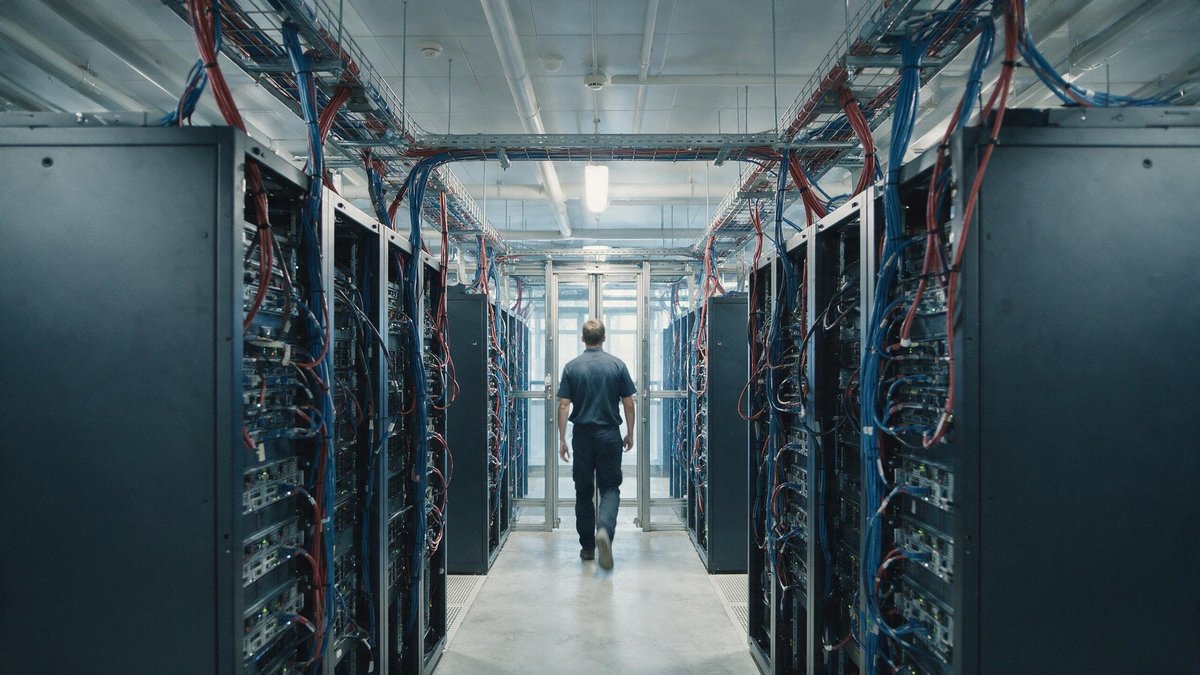
Oracle is taking on historic debt to fundamentally re-architect its physical footprint. Building standard server halls is no longer sufficient when modern machine learning applications require tens of thousands of specialized processors working as a single unified system.
Expanding high-density GPU clusters for enterprise workloads
Legacy enterprise data centers were designed for CPU-heavy tasks, database management, and cloud storage. Modern machine learning models require dense GPU clusters linked by high-bandwidth networking fabrics to process millions of data points simultaneously.
Industrial operations generate massive, continuous streams of telemetry from factories, logistics networks, and energy grids. Processing this volume of physical-world data requires a specialized tier of enterprise AI infrastructure that goes far beyond standard cloud hosting. When predictive maintenance algorithms or real-time simulation models run across hundreds of global manufacturing plants, they consume raw compute at an unprecedented rate. Oracle is betting that industrial firms will choose to outsource this massive hardware burden rather than build dedicated on-premise facilities.
This migration fundamentally changes how enterprise leaders calculate technology spending over the next three years. Massive upfront capital expenditures are shifting into recurring variable operating expenses. Because training and executing complex industrial models demands continuous high-density performance, cloud compute capacity directly dictates the financial reality of deploying every single AI tool. If a cloud vendor lacks dense GPU racks or specialized fluid cooling infrastructure, the cost of running complex operational models skyrockets, making broad deployment financially unsustainable for heavy industrial enterprises.
Scalability now depends entirely on physical access to server hardware and power allocations. Industrial operators attempting to build private server clusters face multi-year delays driven by utility grid constraints, transformer shortages, and hardware lead times. By raising $20 billion in debt, Oracle is attempting to front-run these infrastructure bottlenecks. They are building gigawatt-scale sites specifically engineered to provide dedicated compute capacity to enterprise customers who cannot afford construction delays or equipment supply chain risks.
Between now and 2027, the divide between industrial market leaders and laggards will depend almost entirely on compute reservation strategies. Enterprise teams that secure early access to high-density GPU clusters will deploy automated quality inspection, real-time supply routing, and dynamic energy management across all locations. Organizations reliant on spot-market cloud compute or underpowered legacy systems will face unpredictable operational costs and performance throttle points. Oracle’s massive debt strategy proves that enterprise AI infrastructure is no longer defined by software capability alone, but by physical power access and high-density silicon.
The Operational Impact: How Mega-Cap AI Bets Affect Enterprise ROI
Expect lower unit pricing for specialized industrial models
Capital influxes into massive cloud facilities eventually shift unit economics in favor of industrial operators. As hyper-scaler capacity scales up, raw inference costs for computer vision and high-frequency sensor processing drop significantly. Early adopters paid a steep premium for unoptimized compute cycles, but expanded data center capacity brings predictable, volume-based pricing for domain-specific models across manufacturing sites.
This cost compression fundamentally changes how plant managers calculate project payback. Instead of treating automated visual inspection as an expensive custom software build, facilities can run continuous background inference at a fraction of previous operational expenses.
Oracle’s $20 billion debt push illustrates how directly compute availability governs operational expansion. Over the next three years, cloud compute capacity will be the primary factor determining whether industrial AI deployments scale globally or stall in regional pilot phases. Companies building predictive maintenance engines for hundreds of facilities cannot rely on spot-market server allocation. They require guaranteed throughput backed by physical data center expansions. When providers pour tens of billions into specialized hardware clusters, they build the physical pipeline required to handle sustained, enterprise-wide sensor streams without latency spikes or runaway expenses.
This capital surge shifts enterprise AI infrastructure from a software procurement discussion to a long-term capacity reservation strategy. Operations executives must now negotiate compute access with the same rigor traditionally reserved for raw material supply chains. If a manufacturing conglomerate wants to run real-time process optimization across thirty refineries, compute availability becomes a bottleneck faster than model accuracy. Securing dedicated multi-node clusters early allows firms to lock in predictable operational costs, insulating themselves from sudden price swings when regional demand spikes.
The downstream effect hits the factory floor through practical hybrid architectures. Massive data center clusters absorb the heavy workload of model retraining and continuous digital twin simulations, while pushing lightweight, optimized models to edge devices on site. Because hyperscalers are building out high-bandwidth regional interconnects alongside these data centers, round-trip latency between plant sensors and cloud nodes drops significantly. Plant engineers no longer need to maintain expensive, high-maintenance GPU racks inside dusty, non-climate-controlled industrial environments.
This shift creates a clear operational divide over the next three years. Organizations that align their operational technology with expanded enterprise AI infrastructure will scale automated control systems across global sites within months. Those relying on fragmented, uncommitted server capacity will face volatile pricing, bandwidth caps, and delayed deployments through 2027.

Ready to find AI opportunities in your business?
Book a Free AI Opportunity Audit. It is a 30-minute call where we map the highest-value automations in your operation.
Navigating the Compute Squeeze: How Operations Leaders Should Prepare
Audit high-compute quality inspection workloads early
Operations leaders must audit frame rates, image resolution, and inference frequency across every visual inspection line before the next budget cycle locks in. Continuous high-definition video feeds consume massive compute cycles when simple frame-sampling or local filtering can cut the remote processing footprint by half. Streaming uncompressed camera feeds directly to distant cloud servers inflates server bills unnecessarily without improving defect capture rates on active production lines.
Categorize every quality and inspection workload based on immediate operational urgency.
Real-time defect detection needs split-second response times on the shop floor, whereas end-of-shift scrap reporting can run asynchronously during off-peak hours. Sorting these pipelines keeps critical operations moving while avoiding premium compute surcharges. Oracle’s recent $20 billion financing push underscores how high the stakes have become for raw processing capacity. Big tech providers are spending heavily on power grids, data centers, and specialized chips just to meet expected baseline demand. For industrial enterprises, this infrastructure arms race means cloud compute availability will directly govern project viability and operating margins through 2027.
As demand outpaces server availability, enterprise AI infrastructure costs will no longer scale linearly with operational growth. Facilities that expand computer vision to ten new assembly lines may find their cloud bills multiplying by five if they rely solely on standard, unreserved instances. Oracle’s massive capital expenditure demonstrates that cloud vendors expect hardware bottlenecks to persist. Industrial firms must treat compute capacity as a constrained physical asset, similar to raw materials or factory floor space, rather than an infinite digital resource.
To protect margins over the next three years, operations teams must negotiate reserved capacity agreements alongside their hardware deployments. Securing guaranteed GPU allocations early prevents sudden compute throttling during seasonal volume spikes. Combining local edge processors for immediate shop-floor inference with centralized cloud clusters for heavy model retraining balances latency with long-term hosting expenses. Companies that fail to plan for compute inflation will see automated lines become financial liabilities as processing tariffs rise.
The era of viewing operational software as a simple subscription is over. Scaling now hinges on physical energy access, datacenter footprint, and contract duration. Building resilient enterprise AI infrastructure requires operational leaders to align their engineering roadmaps with cloud provider capital cycles. Those who lock in predictable compute rates today will expand their automated facilities while competitors get priced out of high-throughput model execution.
Source: cnbc.com