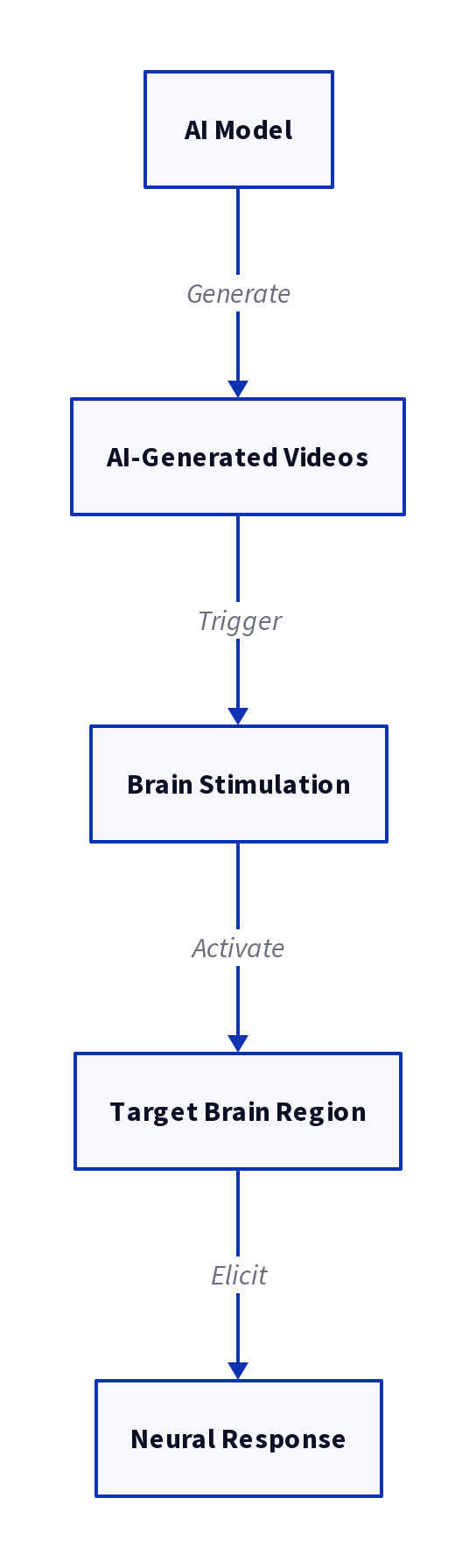
NEvo uses AI-generated videos to activate specific brain regions with precision, turning visual neuroscience into a tool for targeted stimulation. By evolving videos to maximize activation in areas like the parahippocampal place area (PPA) and the posterior superior temporal sulcus (pSTS), it reveals how different parts of the brain respond to motion, faces, and social scenes. You can now create videos that light up the visual cortex in ways natural images or handcrafted clips cannot.
This article explains how NEvo’s method works, starting with a digital twin of the brain, evolving prompts, and animating still images, while showing real examples of videos that drive stronger activation than traditional stimuli. You’ll see how this technology maps the brain’s visual selectivity and what it means for applications in neuroscience, marketing, and beyond.
The Gap Between Visual Stimuli and Brain Activation
Traditional visual stimulation methods lack the precision to target specific brain regions effectively. Natural images or handcrafted videos may engage broad areas of the visual cortex, but they rarely activate a single region with the intensity needed for detailed study or application. This limitation hampers both neuroscience research and practical uses in AI-driven visual stimulation. NEvo addresses this by evolving AI-generated videos to maximize activation in defined regions, such as the PPA or pSTS, proving that targeted stimulation is not only possible but measurable. The result is a tool that aligns visual content with the precise neural responses required for deeper understanding and application.
What NEvo Does and How It Works
NEvo’s use of a digital twin of the brain
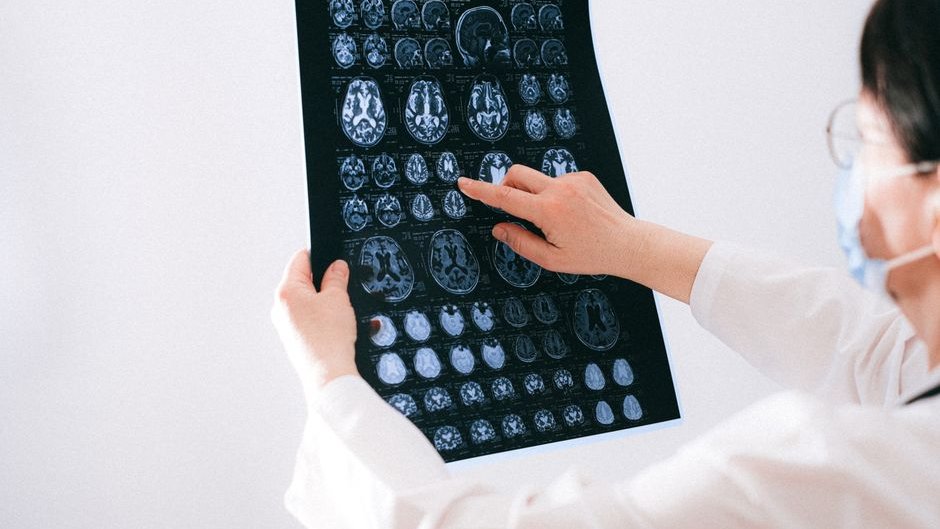
NEvo begins by creating a “digital twin” of the brain, trained to predict how each visual region responds to any video. This model acts as a blueprint, allowing NEvo to ask: which video would make a specific region light up the most? The twin’s predictions guide the search, making it possible to find videos that drive activation in targeted brain areas like the parahippocampal place area (PPA) or the posterior superior temporal sulcus (pSTS).
The evolutionary process of optimizing video prompts
Every video is described by a set of parameters, subject, lighting, motion, mood, that NEvo treats like genetic traits. It generates a batch of videos, scores them based on the digital twin’s predictions, and then keeps, mixes, and tweaks the best ones. Over many generations, the predicted activation in the target region increases. This evolutionary approach ensures that the final videos are not only precise but also optimized for maximum brain region activation.
How NEvo Creates Custom Videos for Specific Brain Regions
From still images to dynamic video clips
NEvo starts by identifying the strongest still image that activates a target brain region. This image is then animated into a 2-second clip, optimizing motion to increase activation. This two-stage process reduces computational costs while ensuring the final video maximizes engagement for the intended brain area.
By first finding the best static frame, NEvo ensures that motion is applied in a way that enhances, rather than distracts from, the brain region’s response. The result is a video that is both visually compelling and scientifically targeted.
Mapping brain region preferences to video content
Each brain region responds to specific visual features. NEvo’s algorithm ensures that videos reflect these preferences, faces for the fusiform face area (FFA), places for the parahippocampal place area (PPA), and motion for the middle temporal area (MT).
The synthesized clips align with known functions of each region, creating content that is not only visually engaging but also biologically relevant. This approach ensures that the videos drive activation more effectively than natural images or handcrafted clips.
Comparing NEvo Videos to Natural and Handcrafted Stimuli
Higher activation scores than natural videos
NEvo-generated videos consistently outperform natural videos in activating specific brain regions. For example, in the PPA, NEvo videos achieve a score of 0.767, significantly higher than the 100.0th percentile of natural images. This demonstrates that AI-generated videos can drive stronger and more targeted activation than what is typically achieved with unmodified visual stimuli.
Handcrafted videos, while designed for specific purposes, also fall short compared to NEvo’s optimized clips. The precision of AI-generated videos ensures that activation is maximized for the intended region, making them a more effective tool for neuroscience research and practical applications.
Motion enhances brain region response
Motion plays a critical role in increasing activation for targeted brain regions. NEvo’s method of first identifying a strong still image and then animating it into a 2-second clip ensures that motion is used to amplify the brain’s response. For every region tested, the moving video outperforms the static version, showing that dynamics are a key driver of activation.
This approach not only enhances engagement but also aligns with what each brain region is known to prefer, such as motion for MT or social scenes for pSTS. The result is a video that is not just visually compelling, but scientifically optimized for maximum impact.
The Social Gradient in Visual Processing
From motion and patterns to social interaction
As NEvo maps brain activity along the lateral stream, it reveals a clear shift from basic visual features to complex social interactions. Early regions like V1 and MT respond strongly to motion and patterns, but as the stream progresses, areas like pSTS and aSTS show a growing preference for faces, people, and social scenes. This gradient shows how the brain transforms raw visual input into meaningful, socially relevant information.
The method captures this progression precisely. Starting with simple stimuli, NEvo’s optimized videos evolve to include more dynamic and social elements as they move along the visual pathway. This mirrors real-world visual processing, where motion and patterns are just the beginning of a deeper, more nuanced understanding of the world.
Auto-generated word clouds reflect brain region preferences
NEvo’s auto-generated word clouds provide a visual summary of what each brain region prioritizes. For example, early regions like V1 show words like “pattern” and “motion,” while later regions like pSTS highlight terms like “face,” “social,” and “interaction.” These word clouds act as a roadmap, showing exactly what kind of content activates each area most effectively.
This level of detail is critical for applications that require precise brain region targeting. By aligning video content with the language and themes that each region responds to, NEvo ensures that stimulation is both effective and efficient. The result is a tool that not only activates the brain but also reveals what drives its responses.
Ready to find AI opportunities in your business?
Book a Free AI Opportunity Audit. It is a 30-minute call where we map the highest-value automations in your operation.
Practical Applications and ROI for AI Video Optimization
Enhancing visual selectivity for targeted applications
NEvo’s ability to generate videos that activate specific brain regions has direct applications in neuroscience, marketing, and AI development. For example, in marketing, videos optimized for the pSTS can be used to create content that better engages viewers with social interactions, improving ad recall and engagement rates. In neuroscience, this method allows for more precise mapping of visual selectivity, revealing how different brain regions process motion, faces, and patterns. The result is a tool that can be applied in both research and commercial settings to drive more effective visual stimulation.
ROI in research and product development
Using NEvo reduces the time and cost of creating targeted visual stimuli, offering a clear ROI for research and product teams. Traditional methods require extensive trial and error, but NEvo automates the process, ensuring that the most effective videos are generated quickly. For instance, NEvo videos drive higher activation scores than natural images, as seen in the PPA with a score of 0.767, which can lead to faster and more accurate results in studies or product testing. This efficiency translates to faster development cycles and more impactful outcomes in both academic and industrial applications.
The Future of AI-Driven Brain Stimulation
Expanding the scope of brain region targeting
NEvo’s current capabilities focus on well-defined regions like PPA and pSTS, but the framework can scale to other areas of the brain. Expanding this targeting opens doors for more precise neurological research and applications in cognitive training, therapy, and even AI model development. As the method evolves, it can map activation patterns across more complex networks, helping researchers understand how the brain processes abstract concepts, language, and emotion.
Integration with emerging AI and neuroscience tools
As AI and neuroscience tools advance, NEvo’s approach can integrate with real-time brain monitoring systems, adaptive learning models, and immersive environments. This synergy could lead to personalized brain stimulation tailored to individual users, improving outcomes in clinical and consumer contexts. The method’s reliance on a digital twin of the brain also positions it to work with AI digital twins in other domains, creating a feedback loop between brain science and machine learning.
Source: nevo-project.epfl.ch