
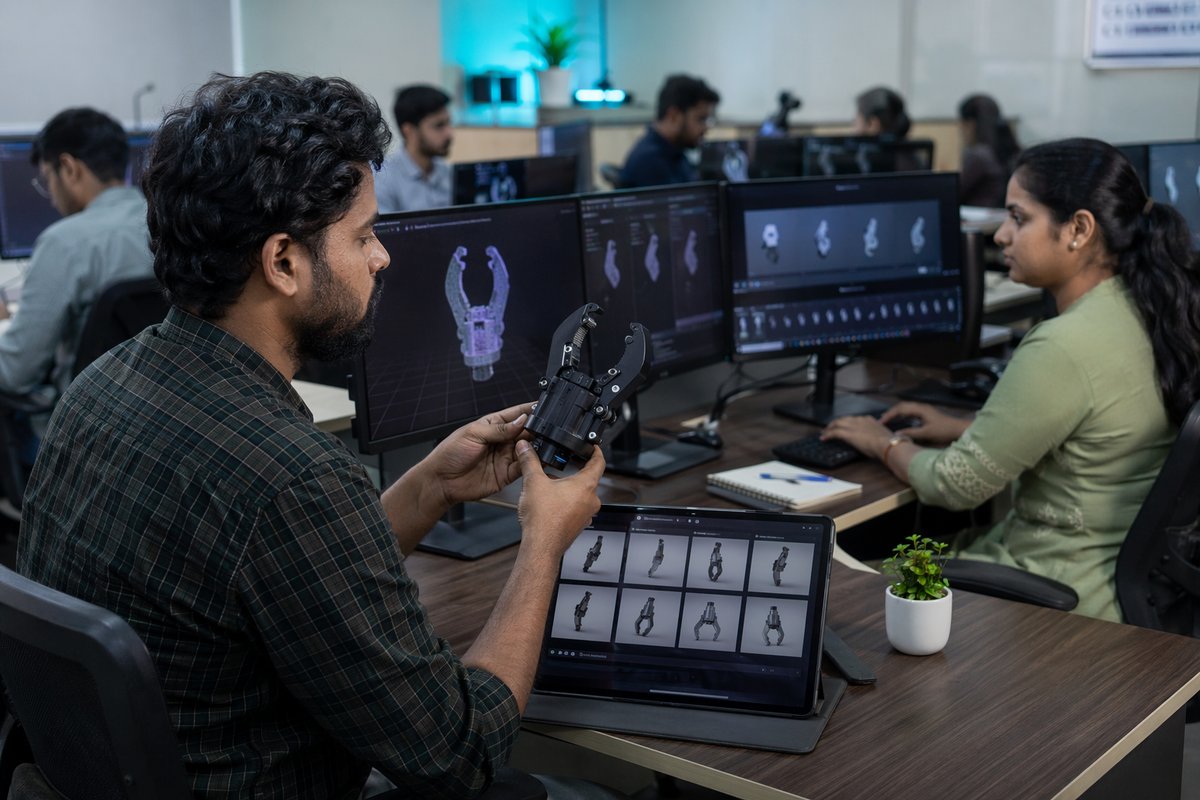
Robotics labs and frontier AI companies are stuck fighting for scraps when it comes to high-quality robot training data. Human Archive, backed by $8.2 million from investors like Y Combinator and Nvidia, is betting on India’s gig economy as the solution. More than 1,000 workers wearing camera-equipped caps are recording their real-world tasks across hotels and home services, feeding AI models exactly the kind of data manufacturing leaders struggle to source.
If you are responsible for quality or operations, the shift is impossible to ignore. This article breaks down how Indian gig workers are transforming robot training data collection and what these developments mean for your manufacturing AI roadmap, concrete impacts, practical risks, and the ROI numbers that matter.
Why Global AI Progress Hits a Data Bottleneck
AI in manufacturing is limited by a shortage of real-world data, not algorithms. Robots need firsthand video of tasks, actual people in kitchens, hotel rooms, or warehouses doing repetitive and nuanced work. Synthetic data and lab demonstrations do not cover the messy complexity of real environments, leaving most AI models underprepared for genuine operations.
Companies like Human Archive see India’s gig economy as a practical answer. With more than 1,000 active headsets capturing egocentric footage of daily labor, they create the kind of diverse, high-volume data that Western robotics labs cannot generate at scale. Getting this right is not a nice-to-have; it is now the critical path for training reliable robots that can augment manufacturing workforces worldwide.
How Human Archive Taps Into India’s Services Startups
Egocentric headsets: what they capture and why it matters
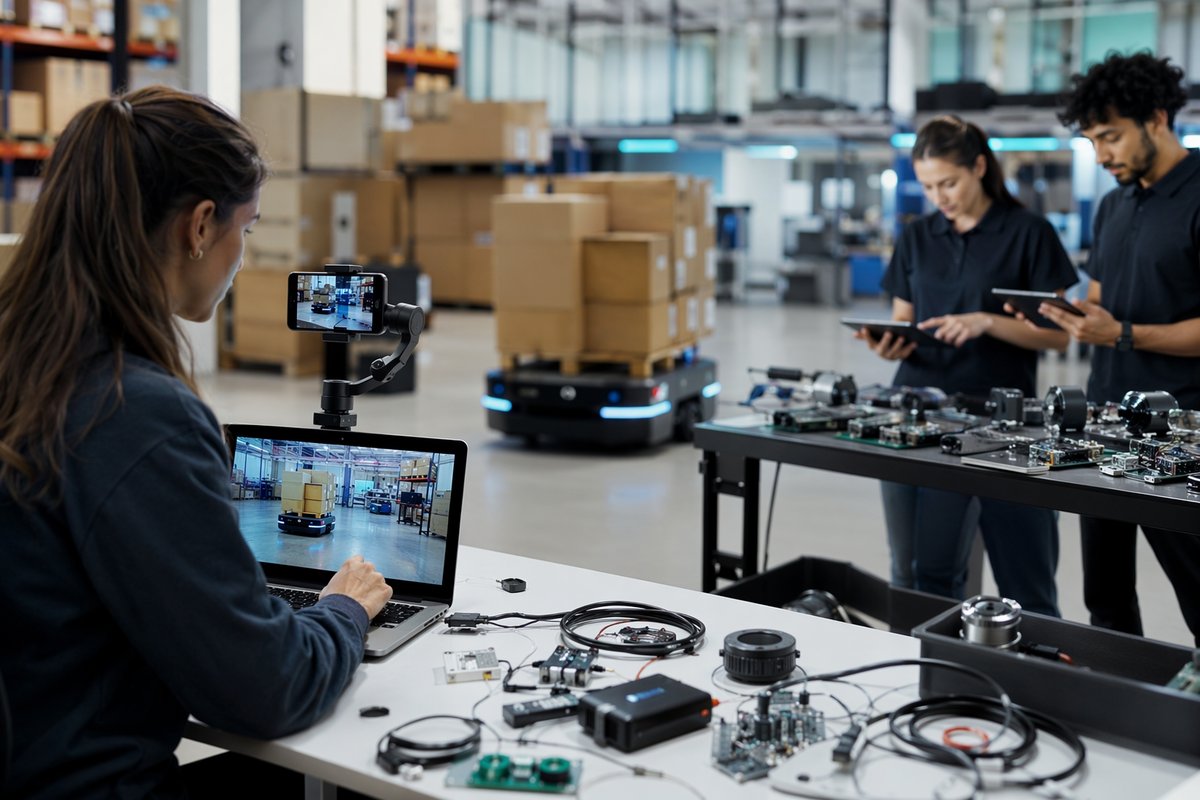
Human Archive sidesteps artificial lab setups entirely. Instead, they distribute camera-equipped caps to gig workers in home services, food delivery, and hospitality roles. These headsets record first-person video of actual work, scrubbing surfaces, navigating kitchens, resetting tables, capturing not only what gets done but also the human judgment and improvisation in each task.
This egocentric video feeds AI systems a steady stream of “real-life” lessons. For manufacturing leaders, that means fewer models trained on contrived or incomplete footage, and more nuanced data reflecting the unexpected variables workers actually confront. This is the difference between a robot trained with real-world complexity, and one doomed to fail outside perfect conditions.
Scale and traction: 1,000+ headsets and sector partnerships
Scale is the game-changer here. Human Archive claims over 1,000 active headsets, collecting data across a web of partnerships in the hotel, restaurant, and home service sectors. Their model rides on India’s fast-maturing gig economy, platforms like Zomato and Swiggy are already household names, and companies such as Urban Company and Snabbit are seeing real uptake, though not all have signed on to data partnerships.
This approach does not rely on one-off pilots. It taps a scalable pipeline of robot training data, sourced from workers doing thousands of routine jobs every day. For operations directors evaluating AI in manufacturing, the playbook is clear: consistent, up-to-date, on-the-ground data beats recycled or artificially-crafted datasets every time.
Real-World Applications for Manufacturing Leaders
Potential for richer, more diverse process data
Most manufacturing AI efforts are held back by homogenous or staged process data. By partnering with companies like Human Archive, Indian gig workers are collecting an unmatched diversity of first-person video across environments. This cuts through the narrow, repetitive scenarios typical of European or US training sets. For operations leaders, the outcome is clear: AI models trained on this range of tasks adapt better to variable, real-world conditions on your factory floor.
For instance, hospitality or home services workers in India encounter ad-hoc problem solving, outdated equipment, and inconsistent workflows. This reality check translates into data with the subtleties your machines will encounter, not just ideal-cycle footage. When you replace sanitized lab samples with raw, egocentric video, you sharpen your AI’s capacity to deal with edge cases, mistakes, and outliers.
Direct link between robust data and actionable AI insights
Quality outcomes depend on the quality and variability of your training data. If your AI only sees one “right” way to clean, assemble, or inspect, small deviations slip through. Diverse, frontline-sourced data changes that. As seen with over 1,000 Human Archive headsets deployed, this means more than just bigger datasets, it means richer context per action, so AI can identify a missed step or unexpected error before it snowballs.
For executives, this is not academic. Faster problem detection, lower defect rates, and reduced manual oversight all depend on AI’s exposure to the real messiness of daily work. That only happens when training data reflects actual complexity, not just “happy path” scenarios. The practical advantage: systems that spot issues your old models missed, and stop bad product before it hits the customer.
What Most Get Wrong About Robotic Training Data
The limits of synthetic and lab data for manufacturing
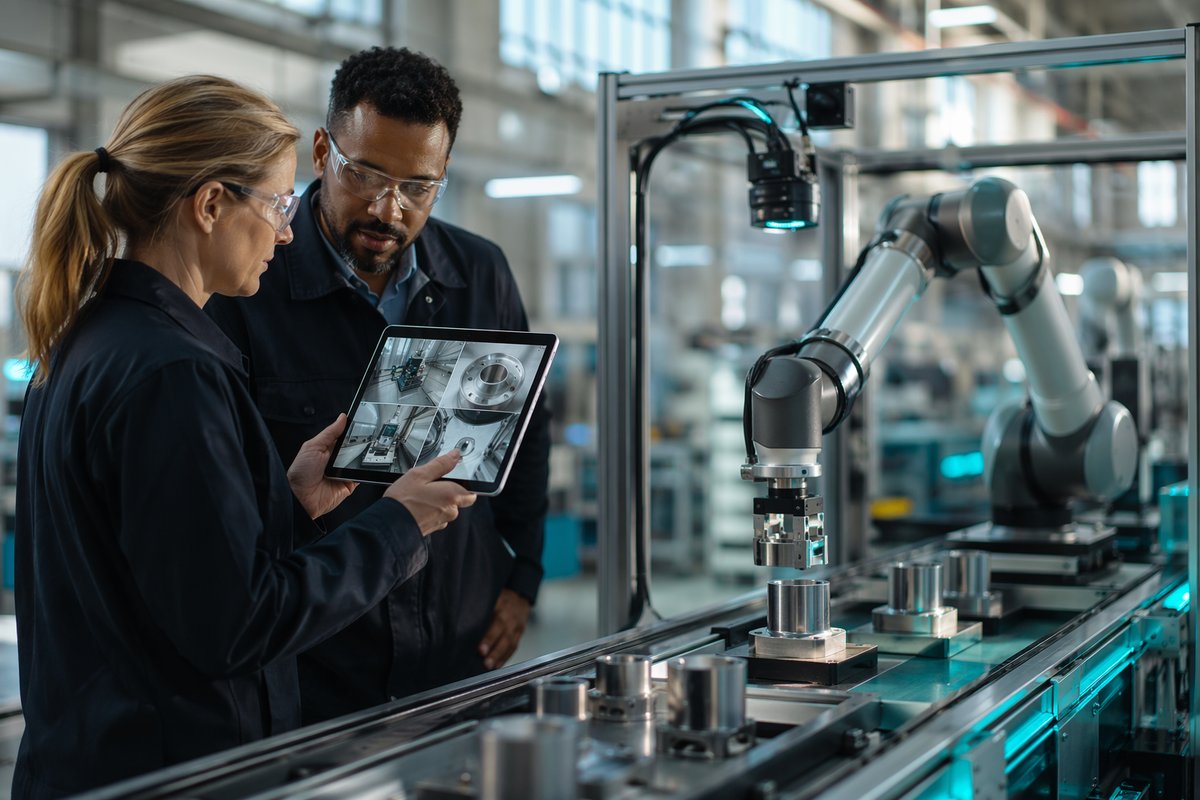
The hard truth for manufacturing AI: training robots on synthetic or carefully staged lab data does not cut it. Simulated environments, while cheap and easy to generate, miss unpredictable realities like worn surfaces, cluttered spaces, and the subtle decision-making of human workers under pressure. Even high-end lab recording setups often sanitize the messiness that defines real operations. The result is AI that looks impressive in demos but fails when deployed on busy lines, repair bays, or assembly stations.
Human Archive’s approach, instructing gig workers from India’s hotel and services sector to record genuine, unfiltered shifts, sidesteps this pitfall. Capturing egocentric video from “on-the-ground” tasks is the only way to build models that stand up to daily chaos, not just idealized conditions. Cutting corners with purely synthetic data keeps robots stuck in pilot phases. Progress demands exposure to how people actually work, not how engineers stage a task.
The risk of bias and lack of process diversity
A critical gap in many robotic training data initiatives: most videos come from Western, highly standardized workplaces. That means algorithms overfit on sterile workflows and miss the improvisation and variety found in actual global manufacturing sites. This lack of diversity leads directly to system bias, AI models struggle when faced with different materials, tools, or methods of work not present in their training sets.
With over 1,000 active headsets across India’s gig economy, Human Archive throws that narrow lens out the window. First-person capture from a spectrum of environments, from crowded kitchens to basic hotel maintenance, gives AI a much broader foundation. The goal is not a “perfect” dataset, but one that is messy, unpredictable, and more likely to produce AI that performs everywhere, not just in a photo-ready lab or European warehouse.
What the Funding and Expansion Signals for Industry ROI
Competitive advantages for early adopters
Human Archive’s $8.2 million funding round, with investors like Wing Venture Capital and angels from OpenAI and Nvidia, should not be ignored by serious manufacturing leaders. The attention from top-tier backers signals that first-mover access to high-quality, real-world process data will be a powerful differentiator. Early adopters will train AI systems that adapt faster and perform more reliably in dynamic environments. These leaders will ship incremental improvements well ahead of the competition, driving continuous gains in productivity and defect reduction while others are still wrangling with “proof-of-concept” pilots.
Integrating this kind of diverse, first-person data from India’s gig economy creates a feedback loop: as more data is collected, models grow sharper, and frontline processes improve rapidly. Competitors who wait for off-the-shelf solutions will find themselves locked out of this cycle, left to recycle the same limited datasets as peers. The winning advantage comes from acting before these partnerships become table stakes.
Strategic actions for operations and quality executives
Practical ROI in AI now depends on choosing the right data suppliers and embedding these flows into daily operations. Executives should:
- Prioritize “in-the-wild” data over staged data: Assess current vendors and require concrete evidence of real-world footage diversity.
- Negotiate exclusive or early-access partnerships: Seek contracts with proven data providers before broader adoption makes custom agreements impossible.
- Integrate data acquisition into frontline operations: Task quality and process leads with embedding new data streams directly in production work, real performance improvement follows direct observation, not secondary reporting.
ROI flows to those who don’t wait for standards to emerge, but invest directly into the next generation of robot training data sources. The leaders are building this muscle now.
Ready to find AI opportunities in your business?
Book a Free AI Opportunity Audit. It is a 30-minute call where we map the highest-value automations in your operation.
What’s Next: Lessons for Leaders Planning AI in 2026
Steps to assess your own data readiness
Too many quality managers assume they have enough usable video or operational data for AI. Start by auditing what you actually have: Where does your current footage come from, controlled pilot cells, or real production runs? List every process step that remains unobserved or staged. Next, review who appears in your data. If your current sets are limited to technical staff or trainers, your models will learn from atypical behavior. Prioritize gathering footage of frontline teams under normal working pressures. Finally, check data permission and compliance. If your existing videos are not cleared for AI training at scale, you have an exposure risk. Address this before inviting outside pilots or tech partners.
How to prioritize authentic data in future pilots
When piloting a new AI solution, set non-negotiable standards for data authenticity. Demand that any robot training data used in your pilots comes from live task environments, not studio simulations. Ask vendors to specify whether data is “egocentric” (first-person view), like the footage Human Archive gathers, as this is consistently more valuable for modeling physical tasks. Require documentation of data diversity too, if every scenario looks like a clean demo, results will not hold up on your worst days. Push your partners to bring evidence that their models were trained on footage from situations as messy and unpredictable as your own line. This clarity, more than any flashy AI demo, determines whether you see a true ROI from scaling AI in operations.
Source: techcrunch.com