

Ferrari knows F1 racing is about more than just lap times. With millions tuning in and mobile use skyrocketing, the team’s fan engagement platform risks falling behind if it can’t keep pace with what modern audiences expect. When IBM joined forces with Ferrari, the goal was clear: use advanced AI to turn raw race data into real-time, personalized experiences inside the Ferrari fan app. As Kameryn Stanhouse of IBM put it, the tech partnership is less about track performance and more about making each supporter feel recognized and involved.
If you’re wondering what enterprise-grade AI can actually deliver for fan engagement, this story has answers. We’ll break down how Ferrari and IBM are using data and automation to create superfans, why this strategy matters for business outcomes, and what steps you can take to build a closer, ROI-driven relationship with your own audiences.
From Data Drought to Data Overload: Why F1 Needs Smarter Fan Engagement
For years, F1 teams operated in a data drought when it came to their audiences. Now, with millions of data points generated every second from sensors and track activity, they face the opposite problem: a flood of information, but no scalable way to translate that into actual fan engagement. Throwing stats at supporters does not build loyalty or interest; it creates noise and fatigue.
Enterprises like Ferrari and IBM recognize that the point is not just to reach fans, but, as newly appointed head of fan development Stefano Pallard says, to “make each of them feel like we know them.” This shift demands precision. Data needs to become relevant stories, not just raw feeds, and that means adopting AI for audience personalization that actually cuts through the overload and delivers what fans value, in real time.

Inside the Ferrari-IBM Alliance: Strategic Objectives Beyond the Podium
Shifting focus: Not just winning races, but winning hearts and minds
The technology arms race in F1 has always prioritized track results. Ferrari’s pivot, in partnership with IBM, signals a clear shift: winning fans is just as critical as winning championships. IBM brings credibility and technical muscle, but the real prize is data-driven loyalty. Kameryn Stanhouse, IBM’s Vice President of Sports and Entertainment Partnerships, positioned this move as essential for transforming how fans connect with the brand, pointing out, “They actually see how [AI] serves them” within the context of sports engagement.
Ferrari’s timing is deliberate. As F1’s global audience grows and digital competition intensifies, building emotional connections can no longer be left to generic social content or legacy apps. The goal is to convert casual followers into committed supporters through meaningful, personalized digital experiences, something only advanced AI can deliver at scale.
Fan development as a core business driver
Ferrari’s decision to create a “head of fan development” role, appointing Stefano Pallard, shows clear operational intent. This is not just a marketing initiative. It reframes the fan base as a central asset, not a passive audience. If you are still handling customer interaction as an add-on, you are behind.
IBM’s expertise in data engineering and AI directly supports this direction. Millions of data points from each race are transformed into “content that is easy to follow and engaging,” as Pallard put it. The business case is concrete: better audience understanding means higher digital engagement, more effective monetization, and stronger brand resilience. For operations leaders, this partnership is proof that fan engagement is now table stakes for enterprise growth, not a side project.
Engineering Superfans: How AI Personalizes the Ferrari Experience
Turning race telemetry into custom content
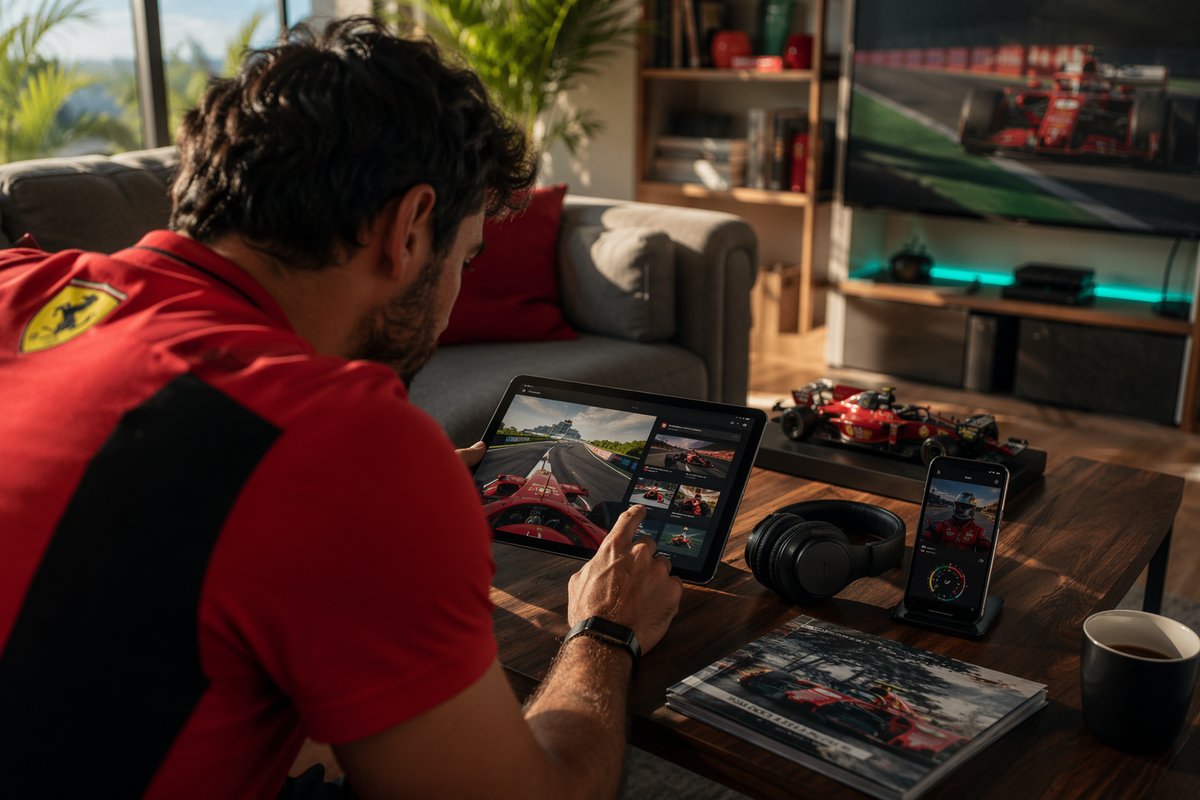
Ferrari’s app, powered by IBM AI, does not dump a flood of raw race stats on its users. Instead, it filters millions of telemetry points via AI models that translate track action into story-driven, engaging updates. Each lap, driver move, and pit strategy is broken down into simple, relevant content based on what each fan actually cares about. For quality-minded leaders, this is the difference between overwhelming your audience and actually connecting with them.
The app dynamically serves recaps, live visualizations, and push notifications tuned to user behavior, whether someone wants technical breakdowns or just highlights. This approach removes manual curation and lets fans engage without sifting through irrelevant information. It is the practical application of audience personalization, turning complexity into tailored experiences at scale.
Creating two-way conversations with millions of users
Ferrari’s strategy goes further than one-way content distribution. The team, under Stefano Pallard’s direction, focuses on making fans feel “like we know them.” AI in the app enables individualized polls, feedback prompts, and interactive features that adapt to each user’s preferences and engagement history. Fans are not passive recipients, they participate, react, and influence future experiences.
Unlike generic social feeds, the Ferrari app captures interaction signals to refine future content, closing the feedback loop. This is where measurable ROI appears: increased session duration, higher app retention, and more actionable insight into the audience’s sentiments. Operations leaders should note, Ferrari is not chasing vanity metrics. The system is engineered for meaningful engagement that directly shapes brand loyalty and recurring touchpoints with the fan base.
What Sets Ferrari’s AI Approach Apart: Choosing Apps Over Social Feeds
Owning the fan relationship vs. renting on third-party platforms
Most F1 teams still funnel their content through social media or the official F1 app. That means every fan interaction is filtered through algorithms set by someone else, and granular data is often inaccessible or diluted. Ferrari, by investing in its standalone fan app powered by IBM, keeps the entire engagement cycle in-house. The benefit is direct data ownership: the team collects, analyzes, and acts on every touchpoint, no gatekeepers or shifting platform rules. This is strategic control that translates into deeper personalization and measurable business value.
If you build your audience on Instagram or X, you rent access but never truly own the user relationship. Algorithm shifts or policy changes can throttle reach overnight. By comparison, with the Ferrari app, executives get a live, unfiltered view of user preferences and behavior, which drives rapid testing and iteration.
Scalability and global reach in audience engagement
Ferrari’s choice pays off as F1’s global fan base surges. A proprietary app scales across markets and languages without limits dictated by third-party platforms. The IBM AI delivers tailored race content and push notifications, adapting to what matters for different segments, whether it is updates timed for a US audience or technical analysis for European superfans. That level of segmentation simply is not feasible when tied to the one-size-fits-all logic of public feeds.
This stack is built for rapid evolution as business needs change. The app can be shaped for sponsorships, exclusive features, or deeper fan communities, all while protecting Ferrari’s brand equity and first-party data. If the ambition is long-term business impact, not just short-term buzz, app-centric strategies like Ferrari’s raise the bar.
ROI That Goes Beyond Likes: Real Business Metrics for F1 Superfan Creation
Driving app downloads, retention, and lifetime value
Personalization is not just a box to check. The Ferrari fan app overhaul, driven by IBM AI, focuses on converting casual followers into loyal, high-value participants. By shaping content around actual user interests, Ferrari pushes higher app downloads and, more importantly, keeps those fans coming back. “Making each of them feel like we know them,” as described by Stefano Pallard, head of fan development, translates into users that stay engaged season after season rather than dropping off after a hype moment.
- Downloads: Direct value comes from expanding owned digital channels rather than relying on rented social reach.
- Retention: When fans receive relevant stories and updates, daily active use rates rise. They open the app on race day and off-day alike, which compounds data quality and future targeting.
- Lifetime value: An owned fan, hooked on personalized content and participation features, is more likely to buy merchandise, attend events, and advocate for the brand in private communities.
Applying insights from sports to industrial contexts
The playbook is clear for operations leaders in manufacturing. If Ferrari can cut through data overload and build meaningful engagement with millions, industrial firms can do the same with their own stakeholders, whether that means operators, technicians, or customers. IBM’s AI approach shows that filtering operational data into focused, actionable insights drives measurable improvement in behaviors that matter: system usage, training uptake, and even cross-sell opportunities. The path to ROI in digital transformation is personalization that moves the needle on actions, not just impressions.

Ready to find AI opportunities in your business?
Book a Free AI Opportunity Audit. It is a 30-minute call where we map the highest-value automations in your operation.
What’s Next: AI’s Evolving Role in Sports and Customer Experience
Potential for next-gen customer personalization
The IBM-Ferrari blueprint signals where AI-driven personalization is headed. We are moving beyond broad audience segments toward genuinely individualized digital experiences. AI engines that sort millions of behavioral signals can now deliver tailored content streams, recommendations, and interactions at enterprise scale. In the B2C arena, this means apps and platforms that adapt in real time to each user, not just automated marketing blasts.
As AI tools mature, expect this model to be standard in industries with a direct consumer interface. Retail loyalty programs, entertainment apps, and even healthcare platforms will follow the Ferrari approach, serving up what each user wants, when and how they want it. That does not mean more push notifications; it means surfaces that feel natively designed for the person holding the device. Systems that still treat users like faceless data points will be left behind.
Lessons for manufacturing and operations leaders
For leaders outside sports, there is a clear lesson: data alone does not create value. In F1, simply collecting millions of data points per second does nothing unless paired with AI that translates this mass into real action. Operations teams should focus on interventions that turn data exhaust into improved quality, smoother processes, or more valuable customer touchpoints. That is what has made IBM’s partnership relevant to Ferrari’s ambitions off the track.
Manufacturing and operations organizations should take note. The future is not about building another dashboard; it is about using AI to automate analysis, filter signal from noise, and deliver smarter recommendations directly to the people who need them. AI for audience personalization in sports is just the start, the same practical approach is overdue inside high-stakes operations everywhere.
Source: techcrunch.com