
Enzyme engineering is stuck in slow-motion, bogged down by trial-and-error routines that leave you waiting months for results. Imperagen, a biotech spinout from Manchester Institute of Biotechnology, is tackling this bottleneck head-on. With a £5 million seed round led by PXN Ventures, Imperagen combines quantum physics simulations, custom AI models, and factory automation to scan millions of mutations virtually and push reliable variants into production faster.
This article shows you exactly how Imperagen’s AI enzyme engineering approach changes day-to-day operations for manufacturing leaders. You’ll see the specific steps that strip out manual work, speed up R&D, and translate directly into shorter timelines and increased ROI.
Why Manual Enzyme Engineering Is Holding Innovation Back
Manual enzyme engineering relies on repetitive trial-and-error cycles that slow everything down. Scientists work through physical mutations in the lab, one at a time, waiting weeks or months for test results before moving forward. That means new enzymes for pharmaceuticals, biofuels, or food production come to market late, costing manufacturers valuable lead time and eroding their competitive edge.
The process is resource-intensive and unpredictable. As Imperagen CEO Guy Levy-Yurista puts it, even “many new AI-powered technologies can pass trial and error but fail when put into practice on an industrial scale.” The gap between experimentation and real-world manufacturing is wide, leaving operations teams stuck with unreliable variants and missed opportunities. Moving past manual methods is critical if you want consistent throughput and leaner development cycles.

How Imperagen’s AI and Quantum Physics Approach Works
Quantum simulations for rapid enzyme mutation predictions
Imperagen replaces slow lab-based methods with quantum physics simulations. Instead of mutating enzymes one by one, they model millions of potential variants on a computer. This quantum-based approach uncovers mutation behaviors quickly, sidestepping months of physical testing. It narrows the field to the most promising enzyme candidates, shaving off lead time that usually holds projects back.
Custom AI models and robotic automation in a closed-loop system
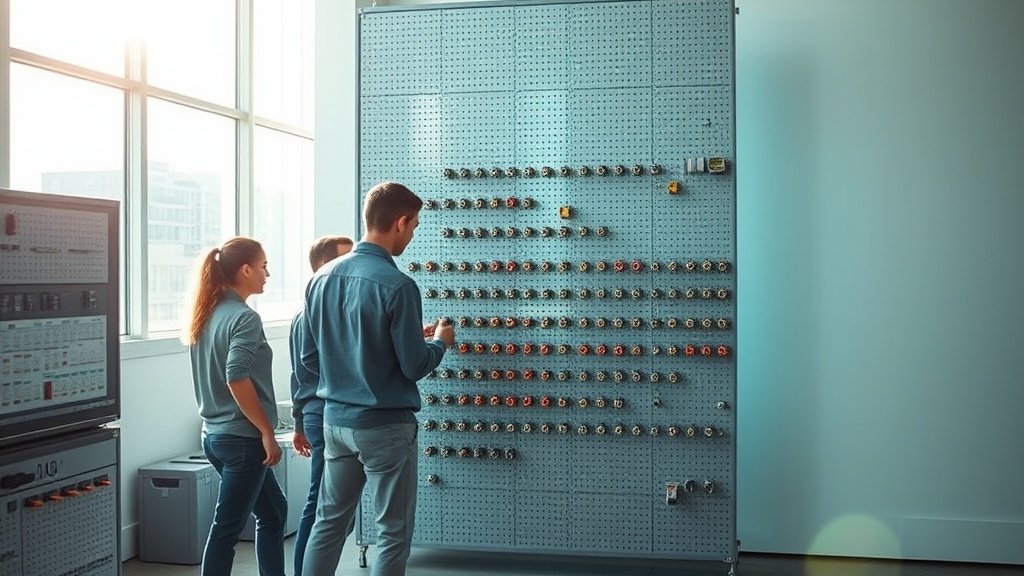
After quantum simulation delivers high-potential enzyme variants, Imperagen runs these options through AI models tailored to specific enzyme problems. The AI doesn’t operate in isolation, robots and automation generate experimental data from real tests, which feeds directly back into the models. This closed-loop simulation is practical: models stay accurate because they learn from fresh, operational data, not just historical results.
From computer model to physical validation: feedback to improve results
The loop from virtual to physical matters. When experimental results come in, Imperagen uses robotics to capture and digitize outcomes, then cycles this knowledge back into their AI for fast iteration. The process means errors and mismatches get caught early, making development faster and more reliable. As new CEO Guy Levy-Yurista notes, many tech solutions pass trial-and-error but stumble at industrial scale. Imperagen’s feedback process is designed to actually improve outcomes as operations ramp up.
Why It Matters for Pharmaceutical and Industrial Manufacturing
Speeding up drug discovery and quality testing
Imperagen’s quantum simulation fusion with AI strips weeks, even months, off enzyme development timelines. Pharmaceutical leaders know that every delay in drug discovery means lost revenue and competitive positioning. By predicting enzyme performance virtually, you can move directly from digital models to physical candidates. This closes the gap in quality testing, getting new therapies or process enzymes into validation far faster. Slice unnecessary waiting out of the workflow, the software narrows millions of options to a handful worth lab work. That translates into quicker decision cycles and fewer bottlenecks for R&D and QA teams.
Reducing production uncertainty and manual work
Trial-and-error has always introduced uncertainty into enzyme manufacturing. Imperagen’s closed-loop simulation cuts through this, giving operations leaders more predictable process outcomes. The integration of robotic automation means fewer manual interventions and less risk of human error. Quality managers gain early data from experimental feedback that keeps product specs tight. As Guy Levy-Yurista, Imperagen’s new CEO, explains, many AI-driven enzyme solutions “fail when put into practice on an industrial scale.” Imperagen’s approach is designed to close this gap, delivering consistent results across sites and shifts. Cleaner workflows and sharper project visibility make a measurable impact on throughput.
Potential for sustainability and cost savings in manufacturing
Manufacturers in food, biofuels, and agriculture spend heavily on trial-heavy enzyme processes. Faster, virtual-first enzyme engineering means less material wasted and fewer physical tests. The impact is clear: lower costs from reduced reagent usage and energy consumption, plus smaller carbon footprints. Sustainability experts are already watching enzyme development news for technologies that actually move the dial on industrial efficiency. When you replace physical guesswork with targeted design, you cut both operational expense and environmental impact. Early adopters will see the ripple effect, less waste, smarter scale-up, and more capital to reinvest elsewhere.

AI in Enzyme Engineering: What Most People Get Wrong
Why traditional AI enzyme models fail in real-world use
Most AI enzyme engineering models are fundamentally limited by narrow, static datasets. They can perform well in controlled lab conditions, predicting enzyme outcomes from past data, but fail when pushed to production scale. The reality is, biological systems are messy. Algorithms built on fixed training sets don’t account for the unknowns that crop up in live industrial environments, temperature swings, ingredient impurities, process variations. Take the case cited by Imperagen CEO Guy Levy-Yurista: even “many new AI-powered technologies can pass trial and error but fail when put into practice on an industrial scale.” That disconnect means wasted R&D cycles and frustrated operations teams.
The importance of physical validation and feedback loops
The only way to get past these hurdles is a closed-loop system. Imperagen’s process integrates quantum simulations, custom AI, and physical automation, feeding real-world experimental outcomes back into the AI model. This continuous feedback forces the algorithm to adapt to practical edge cases, making predictions actually reflect factory conditions. Without physical validation, AI models risk drifting into irrelevance, solid in theory, unreliable in operation. For manufacturing leaders, this approach is non-negotiable: it is the difference between an AI model that repeats past mistakes and one that self-corrects based on actual production results. Automated robotics and data loops aren’t just nice-to-have. They are essential if you want AI in enzyme engineering to drive measurable ROI.
Ready to find AI opportunities in your business?
Book a Free AI Opportunity Audit. It is a 30-minute call where we map the highest-value automations in your operation.
What’s Next: The Future of AI-Assisted Biomanufacturing
How bio-based production can become the new standard
Biomanufacturing is moving past pure research and novelty. Imperagen’s quantum physics biotech platform signals a shift where bio-based production is practical, scalable, and financially viable. By automating enzyme development and integrating predictive AI, manufacturers can rethink workflows and reduce reliance on high-cost, resource-heavy lab testing. The real advantage is twofold: faster cycle times and broader access to custom enzymes, especially in pharmaceuticals, food, and biofuels.
- Process reliability: Closed-loop AI models and robotic data generation make production more predictable, reducing costly downtime.
- Quality control: Automation shrinks human error and speeds up validation, supporting consistent output.
- Sustainability: Enzymes designed and scaled virtually cut waste and improve environmental performance, addressing stricter regulatory targets.
The industry is watching Imperagen, Biomatter, Cradle Bio, and Absci as benchmarks. As platforms mature, expect bio-based production to become a default choice, not an occasional pilot.
When to expect commercial impact and industry adoption
The £5 million funding round announced by Imperagen sets a clear timeline. With this capital, the company is positioned to accelerate commercial rollouts through partnerships and pilot projects. Adoption pattern will follow three steps: initial pilots within high-margin segments like pharma, expansion into food and biofuels where enzyme cost and speed matter most, and finally, broader uptake as price points fall and licensing models evolve.
Imperagen hopes its tech will make enzyme development “faster, more reliable, and more commercially accessible, helping companies bring better bio-based products to market without the long timelines and uncertainty that have traditionally held the field back,” he told TechCrunch.
For operations leaders, watching Imperagen’s next moves is critical. Emerging tools will start to cut cycle times and upfront costs as early as the next 18–24 months. As quantum physics and AI in manufacturing mature, expect industry adoption to shift from cautious experimentation to full-scale process integration.
Source: techcrunch.com