Wall Street hears hype every quarter, but when Nvidia’s Jensen Huang says his company has found a “brand new $200 billion TAM,” manufacturing leaders should pay attention. Huang isn’t talking about pie-in-the-sky AI: he’s putting the new Vera CPU and agentic AI at the center of real, physical automation, hardware that can actually run agents fast enough to change factory floors. Nvidia just closed a record $81.6 billion revenue quarter and projects $91 billion next, all while every major cloud and system vendor lines up for Vera.
If you are frustrated by the slow pace of practical AI automation in your plants, this article will show exactly why Vera and agentic AI matter, how they’re changing industrial automation, and what realistic business value looks like, no fluff, just clear steps for capturing the upside of AI automation in manufacturing.
Manufacturers Face Bottlenecks as Manual Processes Outpace AI Progress
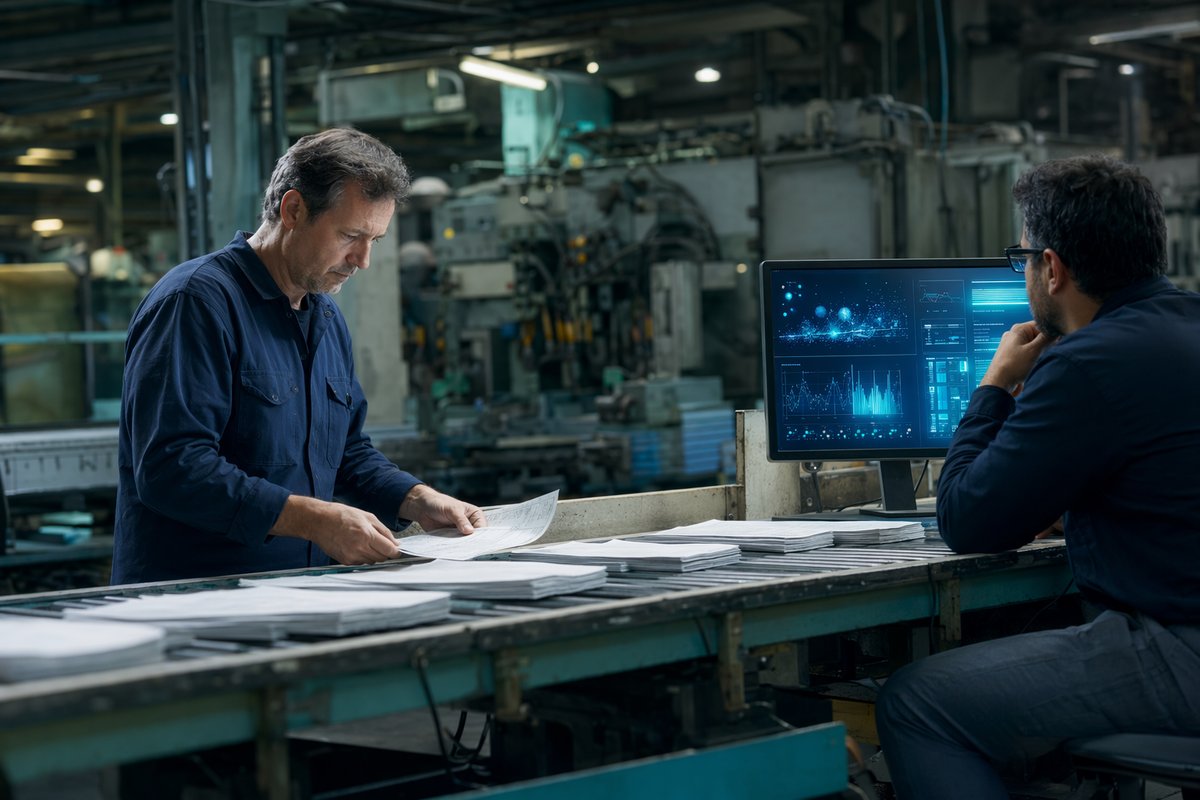
Manufacturing leaders are seeing their AI projects stall, not because the technology is lacking, but because manual tasks and fragmented legacy systems tie up talent and slow down throughput. Production lines still depend on paper logs, siloed spreadsheets, and human inspection, which are hard to scale and almost impossible to optimize with traditional tools. When quality managers spend hours every week tracking rework and defects, it doesn’t matter how advanced the AI models are, results are stuck in first gear.
The disconnect is clear. Even as companies like Nvidia launch products designed for agentic AI, such as the Vera CPU, legacy systems can’t keep pace with automation potential. Too much effort goes into patching gaps between machines, data, and decisions. That means efficiency gains from AI automation in manufacturing stall before they see real impact on quality or cost.
Nvidia’s $200B Bet: What the Vera CPU Means for Industrial Automation
Vera’s purpose-built design for agentic AI tasks
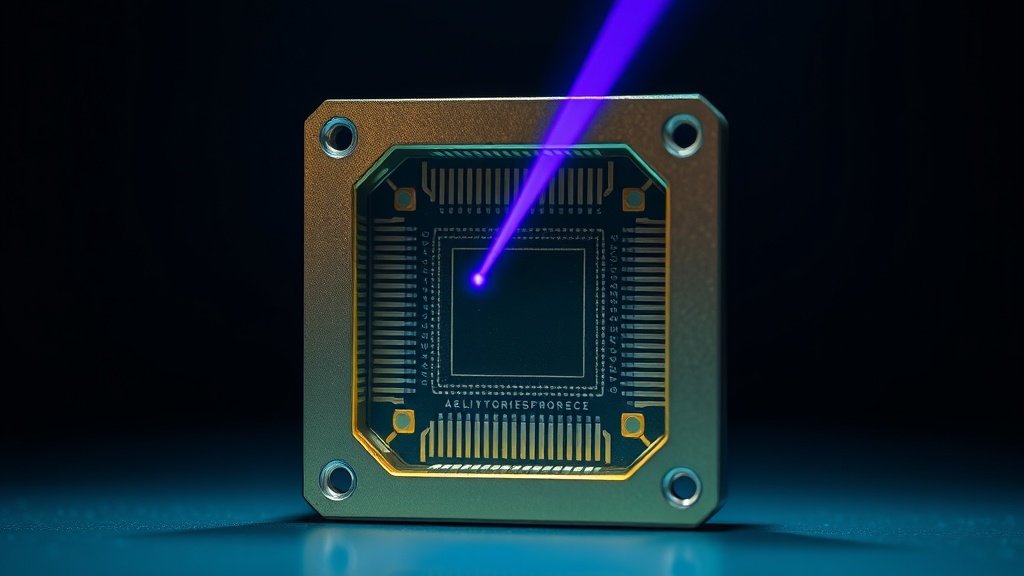
Most CPUs are built for general-purpose computing, but Nvidia’s Vera CPU is different. It was introduced in March and specifically engineered to process tokens rapidly, allowing agentic AI systems to execute real-world instructions with minimal latency. Jensen Huang calls Vera “the world’s first CPU, purpose-built for agentic AI.” For manufacturing operations, this means automated agents can now react, analyze, and optimize workflows at the speed of production rather than waiting on sluggish hardware. That is a direct path to faster quality checks, adaptive scheduling, and hands-off defect tracking.
Impact on CPU vs GPU roles in automation
The dividing line between CPU and GPU is clear: GPUs power the “thinking” in AI models, while CPUs are where agents run tasks. Historically, manufacturers depended on GPUs for process analytics and defect prediction, but this rarely translated into full automation. Vera changes this dynamic. Its token processing speed lets agentic AI handle production jobs, from real-time monitoring to workspace orchestration. In Nvidia’s words, “agents mostly run on CPUs.” This is why every major hyperscaler and system maker is racing to integrate Vera. With CPUs finally built for the specific demands of AI automation, performance bottlenecks in factory environments are no longer inevitable. Operations leaders can now focus on deploying agentic AI where it actually moves the needle.
How Agentic AI Drives Practical Outcomes: Factory Floor to Quality Lab
Automating monitoring and maintenance
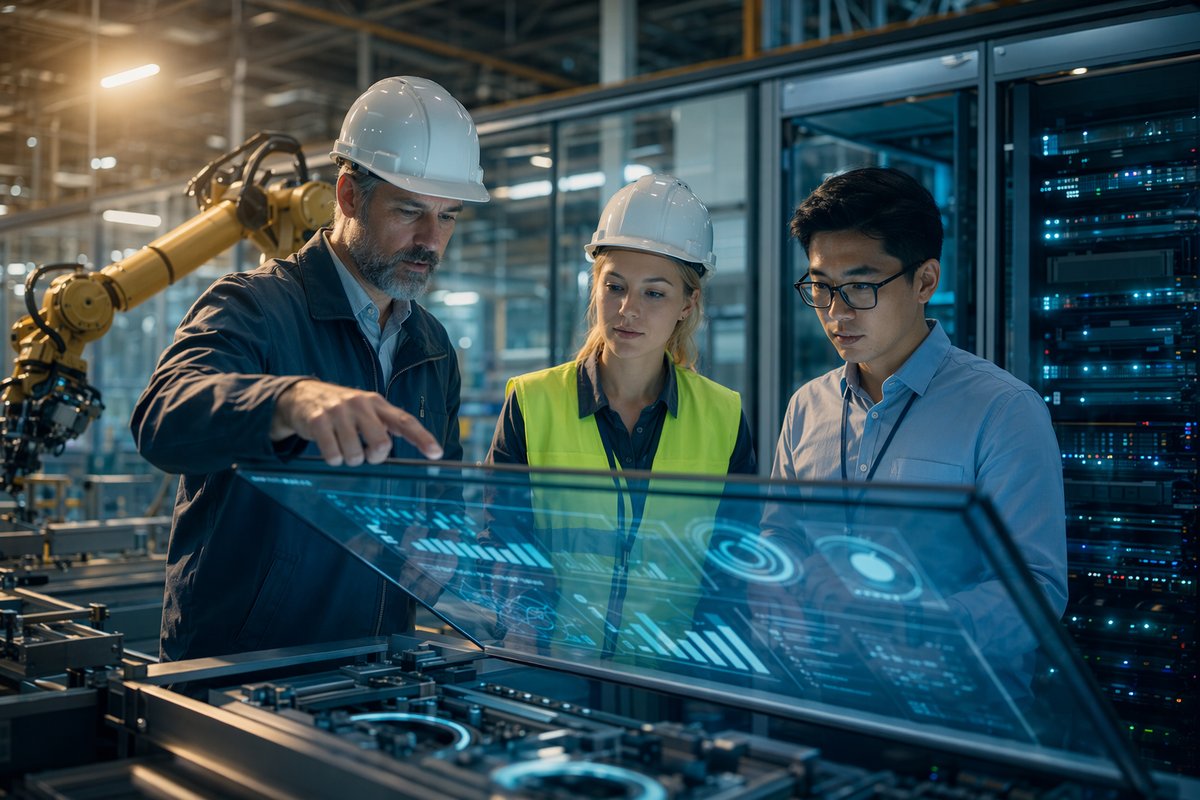
Agentic AI systems running on Nvidia’s Vera CPU can continuously track equipment status, flag anomalies, and trigger preventive actions in real time. This eliminates waiting for scheduled inspections or relying on operator checklists. For example, Vera’s token processing speed enables AI agents to scan sensor feeds, identify deviations, and generate work orders before a minor vibration turns into costly downtime. Integrating condition monitoring with an agentic AI platform means fewer missed alerts and faster incident resolution for production leaders.
Reducing manual quality checks
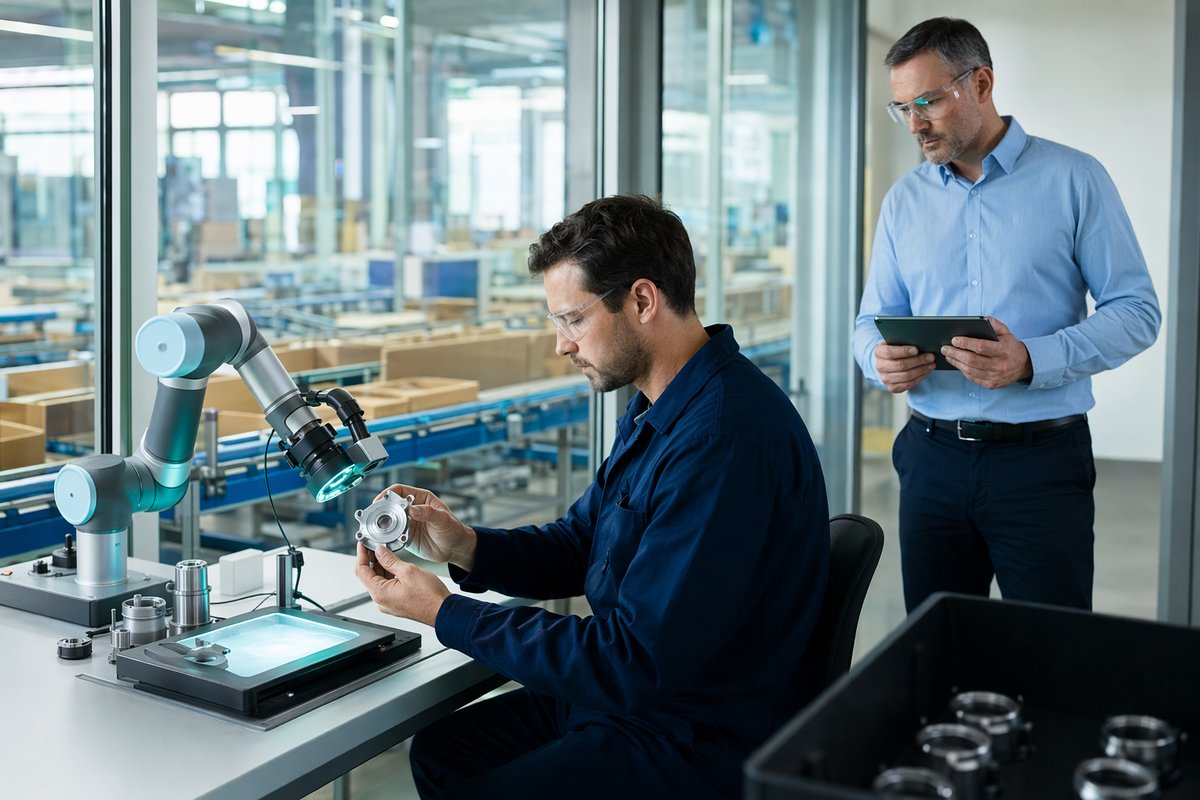
Manual sample testing, visual inspections, and paper-based records waste hours every shift and introduce errors. With agentic AI, quality managers can automate defect detection by linking high-speed vision systems, process data, and AI-guided workflows. Vera’s architecture lets these agents validate output in real time, catch out-of-spec products, and initiate corrective actions without human intervention. This approach streamlines compliance reporting and drives measurable manufacturing quality improvement while freeing staff for higher-value tasks. Automation is only effective when agents execute at the speed of production, and that’s what Vera makes possible.
Implementation Steps for Manufacturing Leaders: What to Do Next
Assess process gaps and AI-readiness
Start by mapping the workflows where manual effort creates delays or errors, such as inspection records, rework tracking, and machine monitoring. Identify where fragmented systems, outdated reporting, or human-dependent checkpoints slow throughput. Evaluate your existing IT infrastructure for compatibility with agentic AI, consider whether you have sensor coverage, data accessibility, and the ability to integrate new hardware like Nvidia’s Vera CPU. Quality managers should meet with IT to review cybersecurity, data pipelines, and potential bottlenecks before bringing in AI agents.
Choose and pilot agentic AI solutions
Focus pilot efforts on high-ROI use cases, like real-time equipment monitoring or inline inspection. Test an agentic AI platform that can run efficiently on Vera, prioritizing token processing speed and workflow integration. Avoid broad rollouts before you see measurable results in a controlled environment. Start with a single production line or process, using vendor solutions that support native Vera CPU deployment. Track key metrics, downtime reduction, defect detection, response time, and evaluate the impact over a set timeframe. Only expand once you see tangible improvements across output and quality, not just efficiency metrics.
What ROI Looks Like: Benchmarking Success in Real-World Manufacturing
Time freed for strategic work
Early deployments of Nvidia’s Vera CPU are showing a direct effect on how manufacturing leaders allocate their attention. When agentic AI is running process control and monitoring, repetitive data checks and manual analysis drop off quickly. Executives report gaining hours each week previously spent on routine oversight, which can be redirected toward planning, supplier negotiations, and product innovation. The opportunity is not simply cost savings. It is the creation of bandwidth for high-value decision-making, and it is measurable in calendar time.
Direct impact on throughput and quality metrics
Manufacturing teams using agentic AI with purpose-built CPUs no longer wait for batch quality checks. Vera’s architecture, optimized for token processing speed, allows AI agents to feed inspection results into feedback loops instantly. This translates to fewer production pauses and faster resolution of quality deviations. Competitive benchmarking shows reduced scrap rates and shorter cycle times compared to operations still dependent on legacy manual checkpoints. The shift is not theoretical. It is visible on production dashboards, where quality managers see real, sustained improvements as agentic AI automates processes that once stalled output.

Ready to find AI opportunities in your business?
Book a Free AI Opportunity Audit. It is a 30-minute call where we map the highest-value automations in your operation.
Beyond the Hype: What Industry Leaders Misunderstand About AI CPUs
Agentic AI is not just for tech giants
Many manufacturing executives assume agentic AI is relevant only for hyperscalers or large tech firms like Amazon and Meta. This thinking mistakes the scale for the use case. Agentic AI, especially when paired with Nvidia’s Vera CPU, is built for any operation needing real-time process automation, even smaller plants with legacy equipment. The key requirement is a data pipeline robust enough for fast token processing. Size does not determine value. If your shop floor relies on granular monitoring, you can benefit just as much as the global players.
CPU vs GPU: Why both matter in practical automation
Another misconception is that AI automation in manufacturing depends exclusively on GPUs. In reality, CPUs and GPUs serve distinct purposes. CPUs like Vera handle agentic tasks, autonomous agents making quick decisions for workflow and machine control. GPUs manage the heavy lifting of training and inference for complex models. Nvidia’s CEO, Jensen Huang, emphasized during the earnings call that “agents mostly run on CPUs” while GPUs are for the “thinking” part. If you want responsive automation tied to physical equipment, investing in both CPU and GPU architecture unlocks more robust quality improvement.
| Component | Primary Role |
|---|---|
| CPU (Vera) | Agent operations, token processing, real-time decisions |
| GPU (Rubin) | Model training, high-volume inference, analytics |
Ignoring the practical split leads to disappointment and wasted spend. Tech is not one-size-fits-all, match architecture to the outcome you need.
Looking Ahead: How AI Automation Will Reshape Manufacturing in 2026
The shift to agentic, self-optimizing factories
As Nvidia’s Vera CPU gains traction, agentic AI will move from siloed pilots to core production systems. Factories will transition from time-bound, human-dependent oversight to autonomous monitoring and decision-making. Agentic AI running on purpose-built CPUs will orchestrate workflows, respond to disruptions, and recalibrate processes, without waiting for human intervention. The era of manual logs and reactive maintenance is ending. Manufacturing leaders should expect a workflow where machines call for their own repairs and adjust quality checks dynamically, making traditional escalation chains obsolete.
Implications for leadership and workforce skills
The operational playbook for manufacturing is about to shift. Executives who understand data and process integration, not just traditional shop floor management, will drive results. Teams will need stronger skills in AI system configuration, sensor deployment, and real-time data interpretation. Routine manual roles will shrink, replaced by strategic problem-solving and continuous improvement. Leaders who can translate the technical advances of agentic AI into actionable outcomes will create the greatest impact. Training priorities should move toward digital literacy and process analytics, as factories adopt agent-driven automation at scale.
Source: techcrunch.com