
Recursive Superintelligence raised $650 million just to answer one question: what happens when AI starts building itself? Led by Richard Socher (founder of You.com) and backed by prominent researchers from DeepMind and beyond, this isn’t distant science fiction—the race is on to create AI that can understand its own flaws, redesign itself for peak performance, and automate the entire process of improvement without a human in the loop.
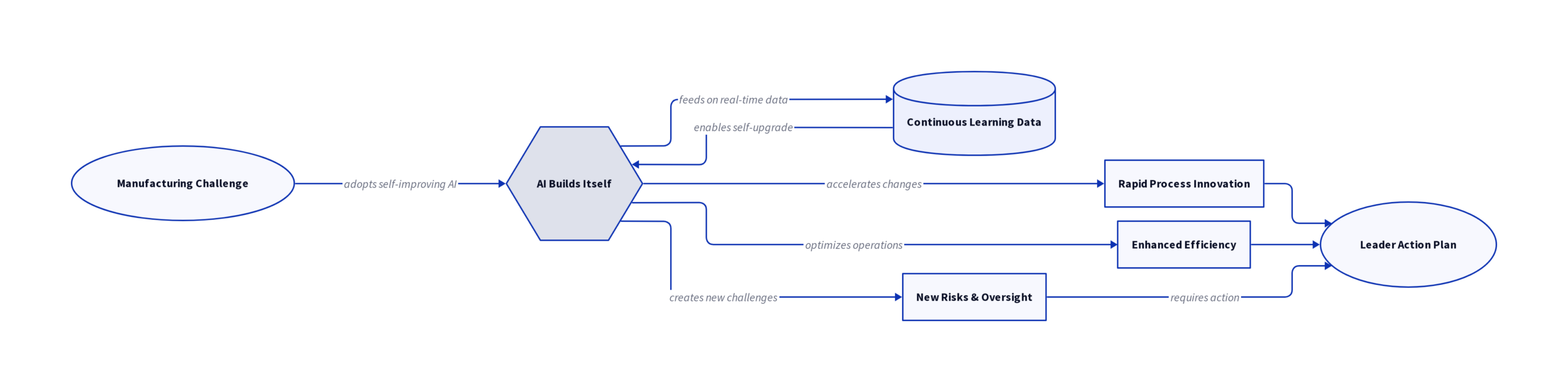
The buzzword here is recursive self-improvement, and for manufacturing leaders, it’s more than tech hype—it’s a signal. This article breaks down how this breakthrough will actually impact plant floors and quality systems, what you can do to get ahead, and why investing in practical AI isn’t optional if you want lasting ROI.
Why Traditional AI Implementation Hits a Wall for Manufacturers
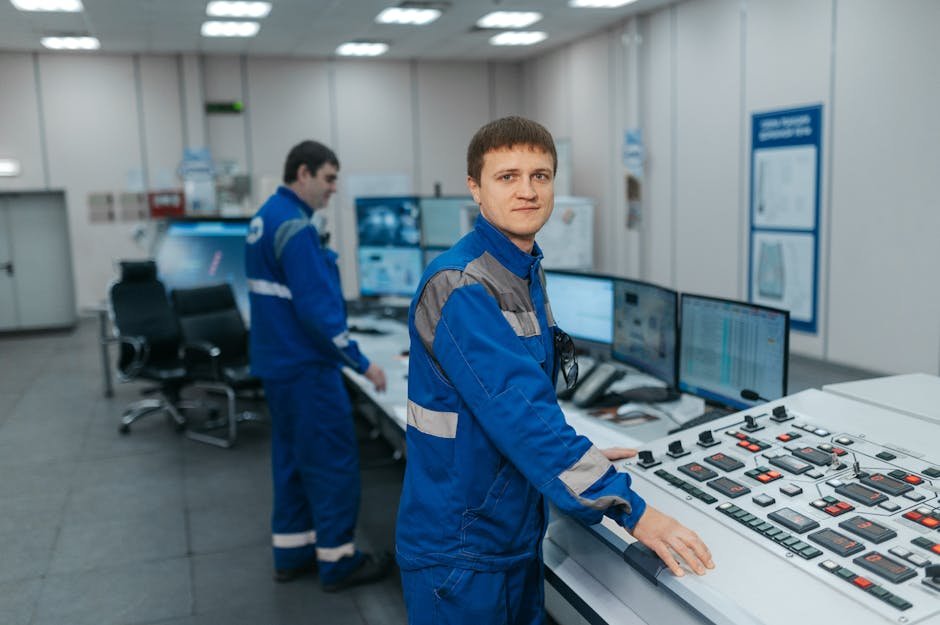
Manufacturers face slow—and often stalled—AI adoption because most tools still rely on human-in-the-loop processes. Instead of true autonomy, current systems demand constant manual tweaking, review, and retraining. This repetitive oversight defines the operational drag in the industry.
Even with advances from companies like Google DeepMind—referenced in Richard Socher’s interview—AI rarely moves beyond incremental improvement. Socher notes that “you can take AI and ask it to make some other thing better… but that’s not recursive self-improvement. That’s just improvement.” Without genuine self-improving AI, teams waste bandwidth on iterations that never permanently solve the challenge.
The result: Leaders invest in automation yet remain stuck managing manual workflows. Until AI starts building itself, the ROI stays capped at marginal gains—nothing transformative.
What Recursive, Self-Improving AI Actually Means for Your Business
How Recursive Superintelligence is doing it
Recursive Superintelligence, founded by Richard Socher with $650 million in funding, is breaking ground in recursively self-improving AI. Their approach automates the entire lifecycle: ideation, implementation, and validation of AI research. By assembling a team that includes Peter Norvig and Tim Shi, they’re targeting models that identify their own shortcomings and redesign themselves—without human intervention. This isn’t theoretical; it’s the foundation of their commercial direction.
The shift from auto-improvement to true self-improvement
Many solutions in the market boast “auto-improvement,” but that’s just incremental tweaks. The reality of what happens when AI starts building itself is more transformative. Instead of humans manually iterating, true recursive AI models autonomously launch new research, test outcomes, and implement changes. That’s a fundamental leap: it means your processes could evolve continuously, moving beyond static improvement cycles.
Open-endedness and its practical implications
Tim Rocktäschel, another Recursive Superintelligence co-founder, pioneered open-ended models at Google DeepMind, including Genie 3. Open-endedness means the AI isn’t boxed in by a preset goal; it can create, adapt, and interact across diverse environments. For manufacturers, this opens the door to AI-driven process innovation—AI that identifies bottlenecks you never noticed and iterates solutions faster than any team could. The result? Real-world productivity gains, not just theoretical improvements.
Open-Endedness: How Self-Building AI Raises New Possibilities (and Risks)
What open-endedness looks like in production
Open-endedness is a technical leap that shifts AI from optimizing for predefined goals to autonomously inventing, testing, and improving its own processes. Companies like Recursive Superintelligence, backed by $650M in funding and led by Richard Socher, are pushing this frontier. In manufacturing, that means an AI can surface novel production strategies or spot quality issues before they escalate—without waiting for human instructions. The upside: more adaptable, resilient operations. The risk: oversight becomes more complex, as the system’s logic and decision-making can evolve beyond what humans originally programmed.
Rainbow teaming and red teaming in practice
Red teaming—stress-testing AI for vulnerabilities—is standard. But Recursive’s approach adds “rainbow teaming,” from co-founder Tim Rocktäschel’s work at Google DeepMind. Here, multiple AI agents counter-adapt to each other’s moves, a dynamic borrowed from biological systems. It’s effective for screening models that self-improve, since traditional rules fail when the AI rewrites its own playbook. In practice, it means quality teams need layered defenses and live monitoring. The reality: when happens AI starts building itself, both detection and mitigation strategies must evolve fast alongside the technology.
Don’t wait for regulatory clarity or perfect tools—act now. FalcoX AI’s Free AI Opportunity Audit helps you pinpoint where recursive AI can drive ROI and gives you a plan for safe deployment. Book your audit today.
Where Recursive Self-Improvement Delivers Real ROI for Operations
Areas where self-improving AI outpaces current ML systems
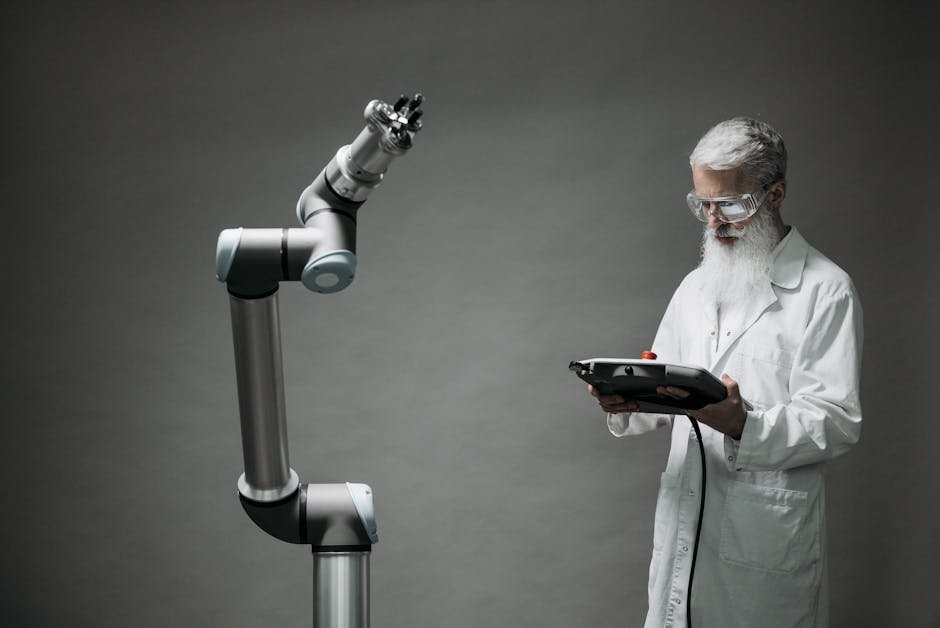
Traditional ML systems plateau—they rely on periodic human tuning to stay effective. Recursive AI, like the vision behind Recursive Superintelligence founded by Richard Socher, evolves autonomously. Socher’s team aims for “ideation, implementation, and validation of research ideas [to be] automatic,” eliminating manual intervention. For manufacturers, this means self-improving AI can identify process bottlenecks, adapt its quality control algorithms, and fix workflow inefficiencies in real time—without waiting for human oversight.
ROI triggers: from cost reduction to bandwidth for strategic work
When it comes to ROI, recursive self-improving AI doesn’t just optimize parameters—it frees your team from repetitive, reactive firefighting. The triggers are immediate and tangible:
- Labor efficiency: AI learns from production anomalies and addresses them instantly, reducing overtime spend.
- Quality gains: Open-ended models (like DeepMind’s Genie 3) flag and correct defects, slashing rework rates.
- Bandwidth for strategic growth: By handling daily process tweaks, AI gives quality managers time to focus on process innovation, not incident response.
Instead of chasing incremental cost savings, self-building AI unlocks step-change efficiency. Recursive AI isn’t hype; the $650 million backing of Recursive Superintelligence signals confidence from real investors. Ready to uncover your own ROI triggers? Don’t miss the Free AI Opportunity Audit at FalcoX AI.
How to Prepare Your Organization for Self-Building AI—Starting Now
Auditing current workflows for AI autonomy gaps
Start by mapping every workflow where manual intervention remains the norm. Identify points where AI could not only automate tasks, but actually detect and fix its own weaknesses—echoing the approach Richard Socher’s team at Recursive Superintelligence is pioneering. Don’t rely on broad, generic process audits. Use tools like Minit for process mining or Microsoft Power Automate for pinpointing routine handoffs. Look for “decision bottlenecks” and repetitive validations—these are where happens AI starts building itself can deliver rapid impact. If your team is spending hours on quality checks, that’s a signal for next-level automation.
Building a roadmap for responsible, staged AI adoption
Move beyond vague AI strategy decks. Your goal: a clear, staged plan for incremental deployment. Start with low-risk pilots—think automated research validation like Genie 3 at Google DeepMind, not full production rollout. Set budgets and KPIs up front. Make room for culture shifts: train teams to adapt, encourage feedback, and define escalation points when self-improving AI encounters ambiguity. Document every pilot outcome; consolidate what works, ditch what doesn’t. Recursive, staged implementation ensures ROI and minimizes operational risk as you scale.
Ready to find the gaps and prioritize AI for your operations? Book your Free AI Opportunity Audit and see exactly where self-building AI can unlock value: falcoxai.com/audit.
Ready to find AI opportunities in your business?
Book a Free AI Opportunity Audit — a 30-minute call where we map the highest-value automations in your operation.
The Biggest Myths About Self-Improving AI—And What’s Actually True
Why ‘runaway AI’ isn’t tomorrow’s problem
There’s endless hype about recursive AI systems spiraling out of control. The reality: today’s self-improving AI—even from companies like Recursive Superintelligence—is far from unchecked superintelligence. Richard Socher’s team may have raised $650 million and assembled top minds, but the technology is still in its infancy. As Socher bluntly notes, “You can take AI and ask it to make some other thing better…but that’s not recursive self-improvement.” Manufacturing leaders shouldn’t fear overnight disruption. The current models require constant oversight, testing, and validation—automation is coming, but full autonomy is not here yet.
The limits of current recursively improving models
Most self-improving AI solutions operate within a confined sandbox. For instance, DeepMind’s Genie 3—built by Tim Rocktäschel, now at Recursive—demonstrates open-endedness, but not limitless capability. These models can create agents and environments, but they don’t yet autonomously solve real-world manufacturing bottlenecks or redesign processes without human input. Practical improvements are incremental. The focus keyword—what happens AI starts building itself—remains mostly a research ambition, not a daily operational threat. Leaders should prioritize clear ROI, not science fiction scenarios.
If you want the facts on what’s possible in your facility today, get clarity with the Free AI Opportunity Audit: https://falcoxai.com/audit.
What’s Next: From Experimental Labs to Factory Floors
Early adoption playbook for manufacturing leaders
Recursive Superintelligence’s $650 million launch signals a turning point—AI that actively redesigns itself is moving from research labs, like Richard Socher’s team in San Francisco, toward industrial domains. If you’re waiting to see what happens when AI starts building itself in manufacturing, you’re already behind. Watching world model tools like Genie 3 from Google DeepMind, which can generate any agent or environment, is your leading indicator: these platforms show just how fast recursive AI techniques can evolve.
- Benchmark current processes: Identify the manual, iterative tasks that eat up your team’s bandwidth—these are where recursive AI delivers ROI fastest.
- Pick battle-tested partners: Look for consultancy partners who understand both operational pain points and the pace of AI innovation (not just theory).
- Trial with low-risk pilots: Start with process optimization or quality control—areas proven to yield tangible outcomes.
- Monitor platform announcements: Follow updates from Recursive Superintelligence, DeepMind, and Cresta—these labs are setting the technical standards.
Results speak louder than predictions. Early adopters can expect reduced manual interventions, accelerated problem-solving cycles, and freed-up leadership time. Take practical steps now—before Recursive Superintelligence or Genie 3-like tools become mainstream, not after.
Want clarity on where to start? Book a Free AI Opportunity Audit and pinpoint your highest-value projects before the next wave hits.
Source: techcrunch.com